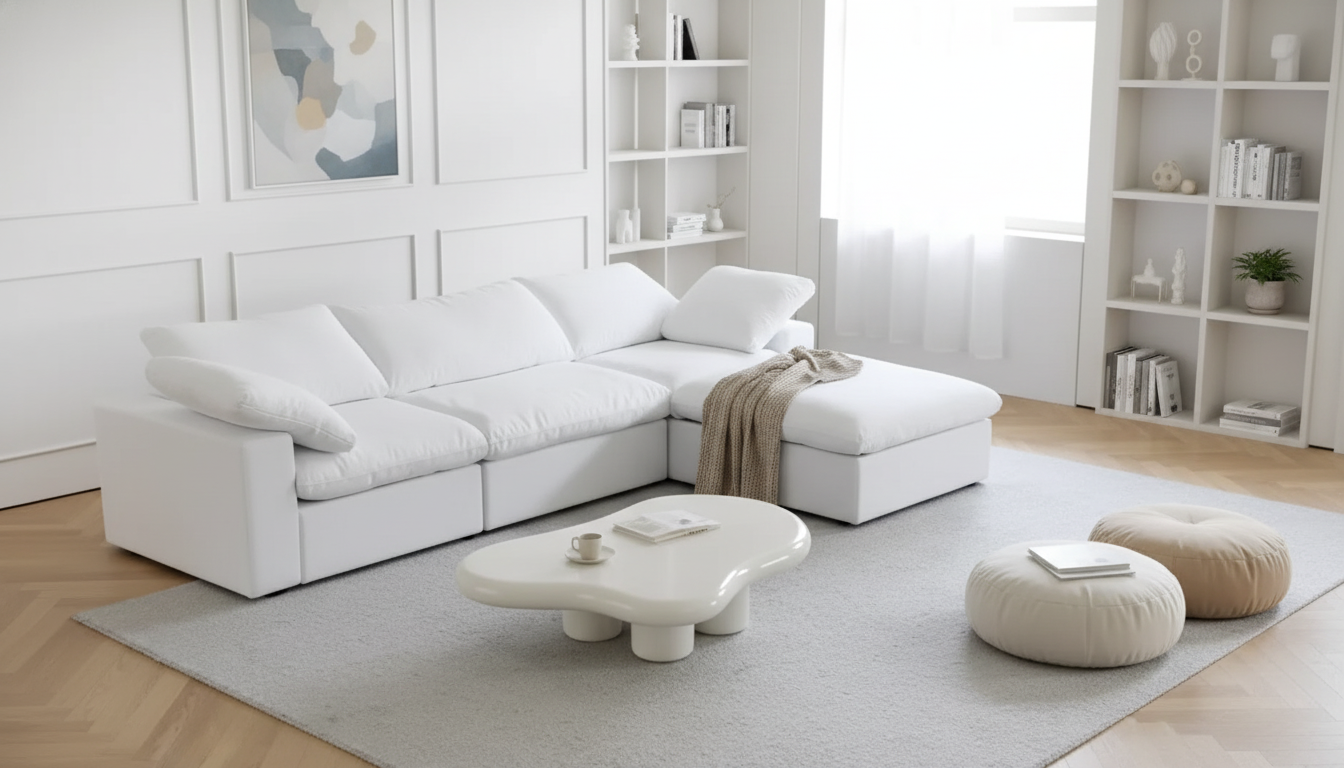
A cloud-style modular sectional is made for deep lounging, flexible room layouts, and a softer, rounded silhouette that instantly relaxes a space. If you’re considering a 120-inch L-shaped setup, the details matter: how the footprint lands in your room, which side the chaise/return should be on, what “cloud” comfort really feels like day to day, and how to keep the upholstery looking fresh. This guide focuses on the practical checks that help the sofa fit the way the room is actually used.
An L-shaped sectional tends to become the “default” gathering spot because it naturally organizes a room without needing extra chairs everywhere. In open-plan layouts, it helps define a living area while still keeping the floorplan feeling connected.
Before committing to a 120-inch run, measure the room like you’re planning a renovation: floors, walls, and the delivery path. Modular seating often solves the “it won’t fit through the door” problem, but only if each module clears the tightest spot.
| What to measure/check | Why it matters | Tip |
|---|---|---|
| Wall length and adjacent clearance | Prevents crowding and blocked pathways | Leave room for side tables and at least one main walkway |
| Doorway width and stair turns | Avoids delivery-day surprises | Measure narrowest point; compare against the largest module size |
| Rug size and placement | Keeps the layout grounded and cohesive | Placing front legs/modules on the rug often looks most intentional |
| Power/outlet access | Keeps chargers and lamps usable | Plan extension routing before final placement |
A 120-inch L can feel polished or awkward depending on how it relates to traffic lanes, the TV wall, and the “drop zone” where people enter the room. Use the sofa to support habits you already have—where you set drinks, where you stretch out, and how you host.
Cloud-style seating is about sink-in ease—great for lounging, reading, and long movie nights. That comfort usually comes with a tradeoff: softer fills can need a little more hands-on upkeep to keep everything looking lofty and even.
For general household safety guidance related to upholstered furniture and recalls, review resources from the U.S. Consumer Product Safety Commission (CPSC). If indoor air quality is a concern, the EPA’s overview of formaldehyde is a useful reference point for common sources and best practices.
Yes—modular sections are designed to move into new layouts, though the range of configurations depends on how many modules you have and how they connect. Check the connector style and whether matching add-on modules are available if you want more layout options later.
Blot immediately with a clean cloth (don’t rub), then test any cleaner in an inconspicuous spot first. Follow the upholstery care code or brand instructions when available, and consider professional cleaning for large or set-in stains to avoid over-wetting cushions.
It often can if it’s modular, since individual sections typically pass through more easily than a one-piece sectional. Measure the narrowest doorway or hallway and compare it to the largest single module, and don’t forget stair turns and elevator depth.










Leave a comment