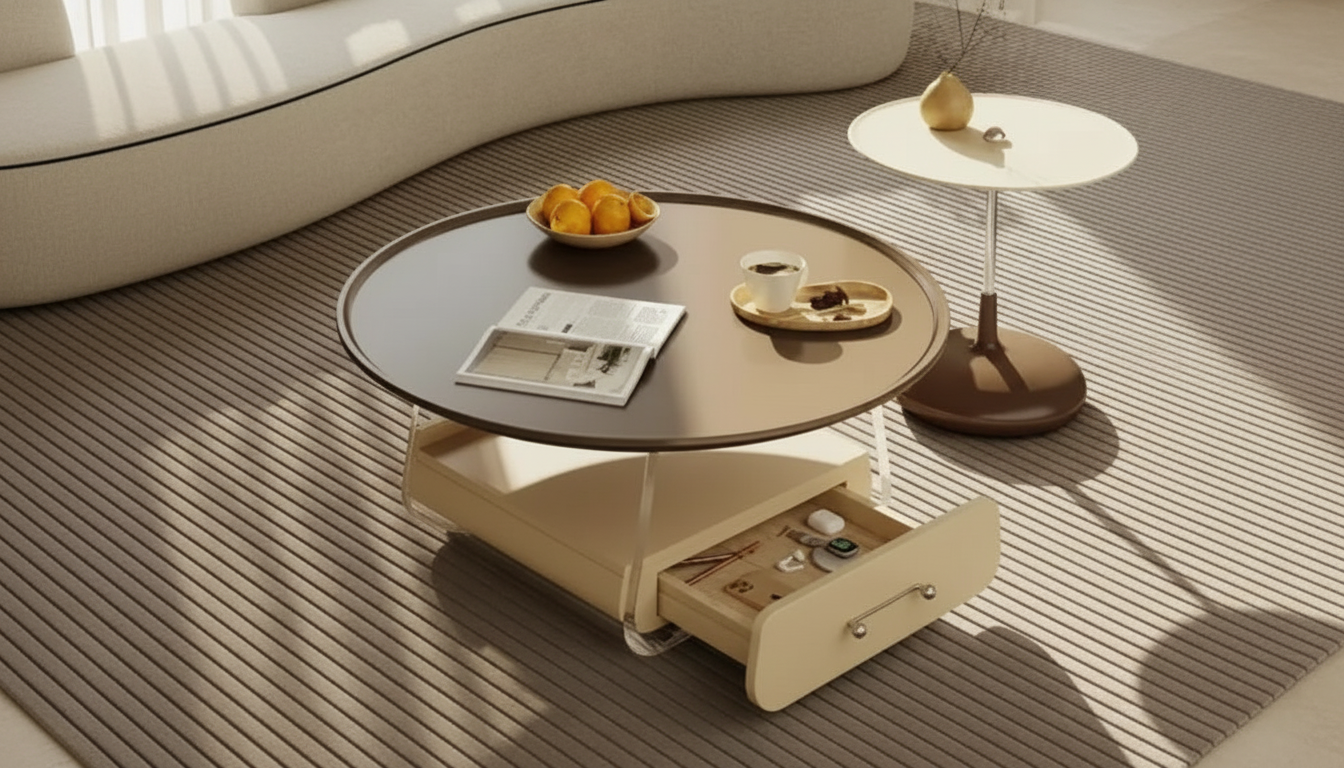
A minimalist Japanese-style coffee table brings visual quiet to a room while keeping everyday essentials close at hand. With warm wood tones, low-profile lines, and an emphasis on balance, it can anchor a living space without overpowering it—especially in homes that favor natural materials, open floor plans, and uncluttered styling. The result is a centerpiece that feels intentional: present, but never loud.
Minimalist design is often defined by reduction and clarity—keeping what matters and removing what distracts. That approach shows up beautifully in Japanese-minimal interiors, where a single well-made wooden table can set the rhythm for the whole seating area. For a broader design context, see Encyclopaedia Britannica’s overview of minimalism.
The “grounded” feeling comes from restraint: fewer visual interruptions, calmer proportions, and materials that naturally soften the room.
A low table also changes how the room feels physically. It invites a slower pace—more tea, more books, more conversation—while maintaining an open sightline across the sofa and chairs. In smaller living rooms, that “open” effect can be just as valuable as the function of the tabletop itself.
A coffee table is touched constantly—cups set down, trays shifted, laptops opened, feet tucked under during movie nights. Build details are what keep a minimalist piece from feeling precious or high-maintenance.
If sustainability is part of the decision, look for responsibly sourced wood and credible certifications. The Forest Stewardship Council explains how the FSC label helps shoppers identify forest products sourced with stronger environmental and social standards.
| Feature | Why it matters | What to look for |
|---|---|---|
| Height | Comfort and reach from seating | Top sits near seat height or slightly lower |
| Top size | Function without crowding | Enough area for a tray + book while leaving negative space |
| Finish | Maintenance and longevity | Easy-clean surface; consider matte for a softer look |
| Base stability | Daily usability | No rocking; sturdy joins; even floor contact |
| Edge shape | Safety and visual softness | Gently rounded or beveled edges in high-traffic rooms |
A minimalist table looks best when styling is edited—objects are chosen for shape, texture, and meaning rather than quantity. The goal isn’t emptiness; it’s clarity.
For an easy “set and forget” arrangement, place the tray slightly off-center, then keep everything else inside that boundary. This makes daily tidying effortless: you return items to one zone and let the remaining surface stay visually quiet.
Even the most beautiful coffee table can feel “off” if it’s placed too far away, too tight, or out of alignment with the seating. Proportion is what makes a minimalist piece look deliberate rather than accidental.
If the goal is a calm focal point with warmth and function, this in-stock option is designed to act as a refined wooden centerpiece: Minimalist Japanese Coffee Table – Aesthetic Wooden Centerpiece for Home. It suits neutral sofas, low seating, and natural textiles, and it pairs easily with simple ceramics, stone accents, and understated lighting.
To complete the “calm living” feeling beyond the tabletop, cozy underfoot comfort can make the lounge zone feel more inviting—especially in homes that skip shoes indoors. A neutral, easy-to-pair option is Birkenstock Women’s Beige Suede Slippers with Buckle and Bow, which complements minimalist palettes without pulling focus from the room’s natural materials.
Aim for a top that sits around seat height or slightly lower. Lower profiles feel more grounded and naturally align with Japanese-minimal interiors.
Use one tray plus one organic element (like a small vase) and leave intentional negative space. Limiting the palette and repeating materials keeps it warm, not sparse.
Use coasters and trays, wipe moisture promptly, and avoid placing hot items directly on the surface. Stick to gentle, wood-safe cleaners to preserve the finish.










Leave a comment