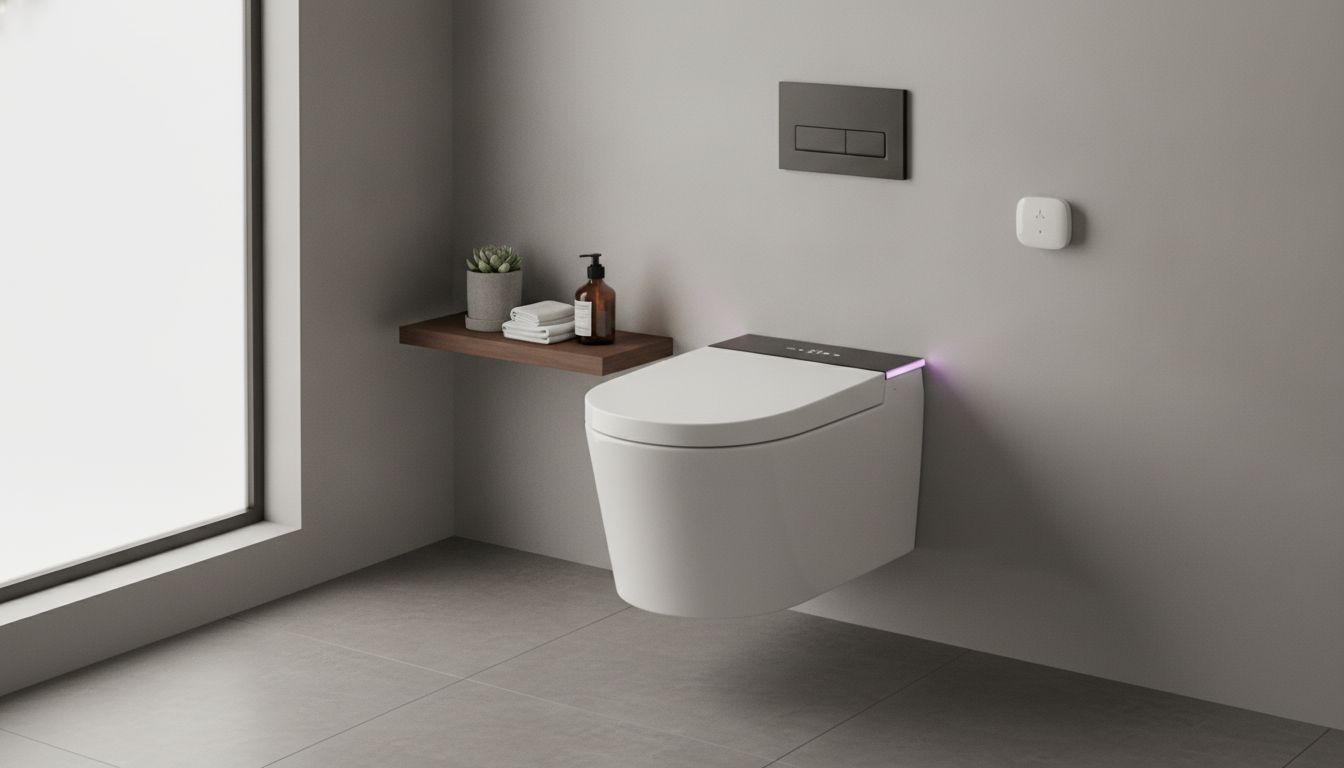
A wall mounted smart toilet with a concealed tank delivers a sleek, floating profile while adding automated comfort features that reduce daily touchpoints. By moving the tank into the wall and supporting the bowl with an in-wall carrier frame, bathrooms gain visual space and simpler floor cleaning. Automatic functions—such as hands-free lid operation, personalized washing, warm air drying, and deodorization—can make routines more hygienic and consistent. This guide covers what to expect from this type of toilet, what to verify before installation, and how to decide if it fits a remodel or new build.
What Makes a Wall Mounted Smart Toilet Different
Wall-hung smart toilets combine two upgrades that change how a bathroom looks and functions: an in-wall carrier and cistern, plus powered automation.
- Floating, wall-hung bowl: the bowl mounts to an in-wall carrier system, leaving the floor clear for easier mopping and a modern look.
- Concealed tank: the cistern sits behind the wall, typically accessed through the flush plate area for servicing.
- Smart automation: common features include auto open/close, automatic flushing, seat warming, bidet wash modes, and drying.
- Cleaner touchpoints: hands-free options can reduce contact with lids and flush controls, especially useful in shared bathrooms.
- Space perception: even when the footprint is similar to a floor model, the open floor can make compact bathrooms feel larger.
Automatic Features That Matter Most Day to Day
Not every “smart” feature feels equally useful after the novelty wears off. The most satisfying setups focus on comfort, consistency, and easy control.
- Hands-free lid and seat: motion-sensing open/close can be convenient; look for adjustable sensitivity and a manual override.
- Automatic flush: can be timer-based or sensor-based; confirm whether it offers partial/full flush options for water savings.
- Bidet washing: prioritize adjustable water pressure, nozzle position, and temperature; separate front/rear modes support comfort and hygiene.
- Heated seat and warm water: check whether heating is instantaneous or uses a reservoir, and whether eco modes reduce standby power use.
- Warm air drying: useful for reducing paper use; verify adjustable air temperature and a comfortable drying duration.
- Deodorization and filtration: some models use activated carbon filters or airflow systems to minimize odors during and after use.
- Nozzle hygiene: self-cleaning nozzles, UV sterilization, or rinse cycles can reduce maintenance, but still require periodic manual cleaning.
- Night light and quiet mode: subtle lighting improves nighttime use; soft-close and silent operation help in en-suites.
Common smart functions and what to verify
| Feature |
Why it helps |
What to confirm before buying |
| Auto open/close |
Reduces touching and improves convenience |
Sensor range, manual controls, power-off behavior |
| Auto flush |
Hands-free hygiene and consistent flushing |
Partial/full options, reliability, access for service |
| Heated seat |
Comfort in cooler seasons |
Temperature levels, energy-saving mode, quick warm-up |
| Bidet wash modes |
Improved personal hygiene |
Adjustable pressure/position/temperature, separate front/rear |
| Warm air dryer |
Less paper use and cleaner finish |
Air temp levels, noise level, drying time |
| Deodorizer/filter |
Fresher bathroom air |
Filter type, replacement availability, maintenance interval |
Concealed Tank Basics: Access, Service, and Reliability
A concealed cistern can be extremely dependable, but the wall build-out makes planning and parts support more important than with a standard toilet.
- Service access: most concealed cisterns are serviced through the flush plate opening; verify replacement parts and access clearance.
- Carrier frame quality: the in-wall frame bears the load; confirm weight rating and compatibility with the wall type (stud wall or masonry).
- Leak prevention: proper sealing, shutoff access, and pressure-tested connections are essential; consider professional installation if unsure.
- Noise reduction: concealed tanks can reduce perceived flushing noise; insulation and correct mounting help avoid vibration.
- Future proofing: choose a system with readily available flush valves, gaskets, and cartridges to simplify long-term upkeep.
For water efficiency guidance and flush performance benchmarks, the EPA WaterSense toilet resource is a helpful reference. For code alignment and plumbing product considerations, consult your installer and local requirements; organizations like IAPMO provide standards and code support across many jurisdictions.
Installation Checklist Before Ordering
Wall-mounted smart toilets are easiest when the bathroom is already open for remodeling. Before ordering, confirm these practical details so the carrier, plumbing, and power all land where they should.
Cleaning and Maintenance: Keeping It Running Smoothly
Who This Setup Fits Best
Featured Items
FAQ
Can a wall mounted smart toilet be installed in an existing bathroom?
Yes in many cases, but it often requires opening the wall for a carrier frame and concealed tank, confirming drain compatibility, and adding a nearby GFCI outlet for power.
How is a concealed tank serviced if something goes wrong?
Most concealed cisterns are designed to be accessed through the flush plate opening; confirm parts availability and that the shutoff and key components are reachable without removing tile.
Do automatic features still work if the power goes out?
Bidet and drying functions typically require power, and some models may disable auto open/close during an outage. Many systems still allow a manual flush through the concealed cistern mechanism, so check the specific model’s backup behavior and override method.
Recommended for you









Leave a comment