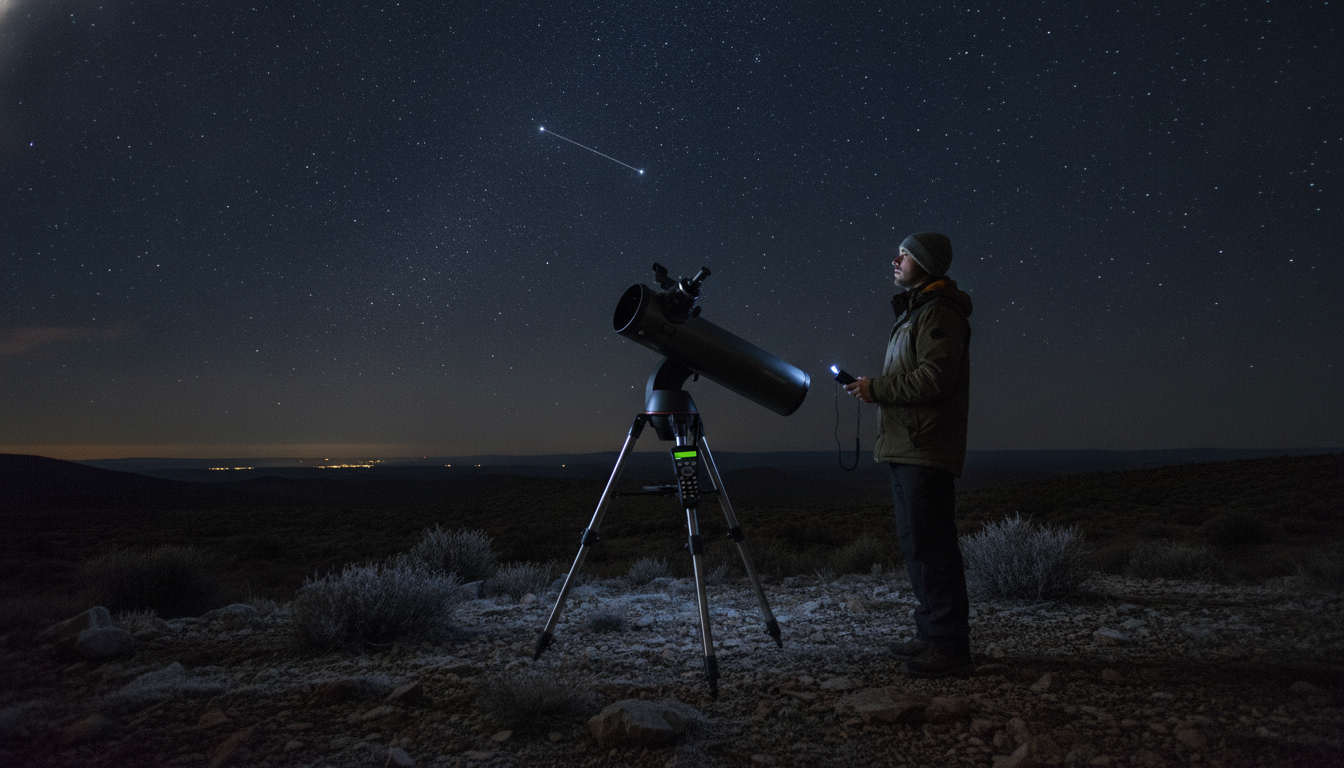
A computerized Newtonian reflector is a practical way to spend more time observing and less time hunting. By pairing a light-gathering mirror system with automated pointing, tracking, and a SkyAlign-style alignment routine, a compact Newtonian can deliver satisfying views of the Moon, planets, and brighter deep-sky objects—without requiring perfect star-hopping skills. Below is what to expect from this style of telescope, how to get dialed in quickly, and which accessories usually deliver the biggest real-world improvement.
Compact Newtonian reflectors punch above their size because mirrors gather a lot of light for the dollar and for the footprint. Add computerized pointing and tracking, and the telescope becomes especially friendly for short weeknight sessions and shared viewing.
SkyAlign-style routines are designed to be fast and forgiving, but accuracy still depends on a few simple habits. A smoother setup also reduces frustration later when you start hopping through object lists.
For additional alignment guidance and troubleshooting steps, see the manufacturer-style overview at Celestron Support — Telescope Alignment.
Compact Newtonians often shine at low-to-moderate magnification where wide fields and bright images make targets easier and more attractive. Planetary detail is still possible, but the best views come when optics, temperature, and atmospheric steadiness cooperate.
To plan targets that fit your sky conditions, a free planetarium app can help—try Stellarium to preview what’s up and when it will be highest in the sky.
For general observing tips and community resources, the NASA Night Sky Network is a reliable reference.
| Goal | Most helpful add-on | Why it helps |
|---|---|---|
| Find targets faster | Wide-field eyepiece | Larger true field makes centering alignment stars and locating objects easier |
| Sharper images | Collimation aid | Improves star shape and contrast, especially at higher power |
| More reliable sessions | External power pack | Reduces tracking issues and avoids mid-session resets |
| More detail on planets | Mid-power eyepiece | Reaches useful magnification without pushing beyond seeing conditions |
No. A SkyAlign-style routine can use bright objects you can easily identify, and accuracy improves when those objects are well separated across the sky. The biggest keys are entering correct time/location settings and centering each target precisely with slow slew rates.
It’s smart to check collimation periodically and anytime the telescope has been transported. Small touch-ups are common, and signs you’re out of collimation include stars that won’t focus cleanly and reduced planetary sharpness.
Verify date, time, time zone, and daylight saving settings, and make sure power is stable. Then redo alignment using three well-separated bright targets and confirm the finder is aligned to the main optics so centering is accurate.












Leave a comment