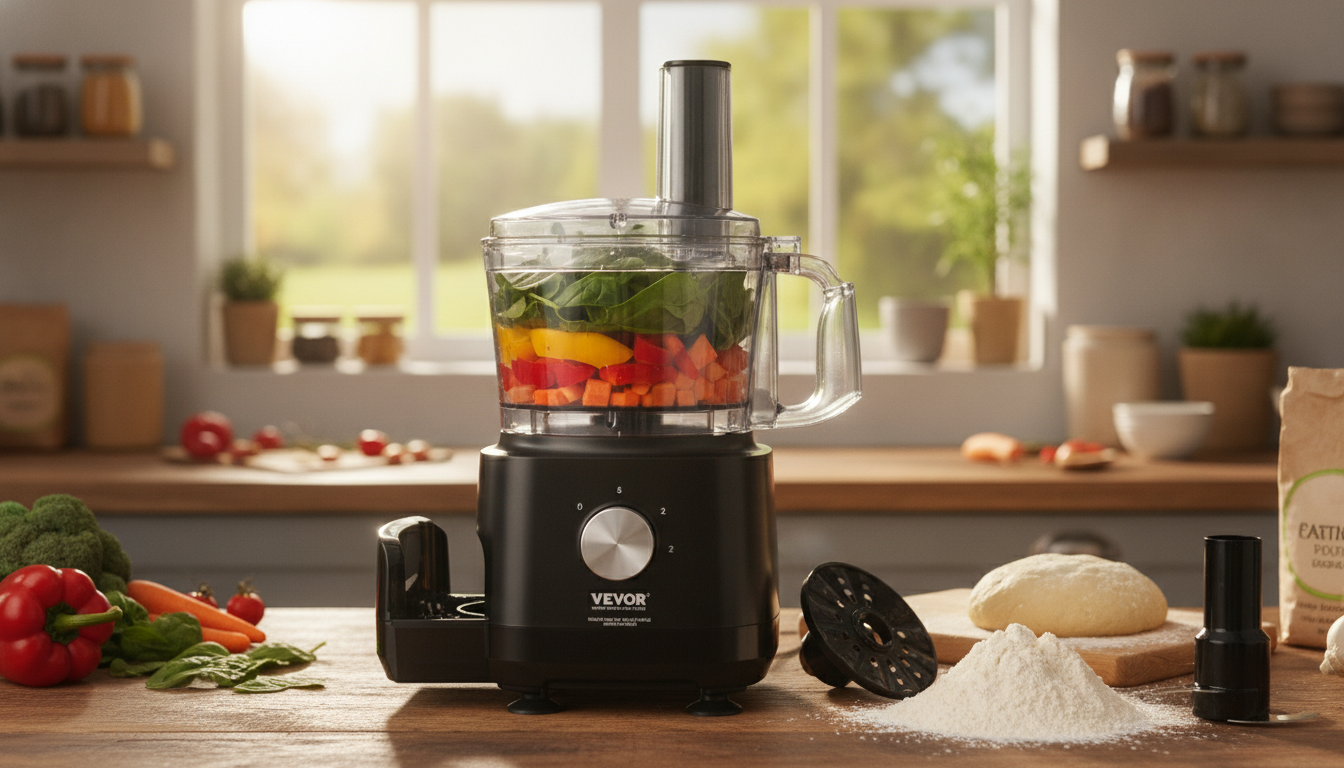
A 9-cup food processor with a 600W motor is a practical “daily driver” for home cooking: big enough for weeknight prep and moderate batch cooking, yet compact enough to live on the counter. It can chop vegetables for soups, slice produce for salads, shred cheese for tacos, blend dips, and handle small-to-medium dough batches—without turning your kitchen into an appliance obstacle course. Below is what this size and power level does best, how the key parts work together, and the small technique tweaks that lead to cleaner cuts and better texture.
What a 9-cup, 600W food processor is best at
- Everyday batch sizes: A 9-cup bowl is comfortable for salsa, hummus, slaws, shredded cheese, and pastry dough without constant emptying.
- Confident power for real prep: 600W is designed to push through denser vegetables (carrots, sweet potatoes), firmer cheeses, and basic dough kneading—within reasonable batch limits.
- Weeknight speed: Quick chopping and slicing can shorten prep time for stir-fries, sheet-pan meals, soups, and salad kits.
- Fewer tools on the counter: It can replace a lot of knife-and-board time, a box grater, and some mixing steps for dressings and dips.
Key parts and how they work together
- Work bowl (9-cup): The capacity determines how much circulates efficiently around the blade or disc. Avoid packing ingredients above the manufacturer’s fill guidance to prevent uneven results.
- Feed tube and pusher: The feed tube stabilizes ingredients for slicing/shredding. Uniform pressure with the pusher helps produce consistent thickness and reduces “half-moon” slices.
- S-blade (chopping/mixing): Best for onions, nuts, herbs, and sauces. Pulse for control, and pause to scrape the sides so everything processes evenly.
- Slicing/shredding discs: Built for uniform cuts. For soft cheese, chilling first helps reduce smearing and clumping.
- Dough tool (if included): Kneads by pushing and folding. Keep kneading times short and monitor dough temperature so gluten develops without overheating.
Performance expectations: chopping, slicing, and dough kneading
- Chopping: Use short pulses when texture matters (pico de gallo, chopped onions). Continuous running creates finer mince or purées—ideal for sauces and smooth dips.
- Slicing: Firmer produce (cucumbers, carrots, potatoes) typically slices cleaner than very ripe or soft items. Trim ends flat so pieces don’t tip inside the feed tube.
- Shredding: Chilled ingredients shred more cleanly. Cut blocks into feed-tube-friendly pieces so the disc stays in steady contact instead of bouncing.
- Dough kneading: Best for small-to-medium batches. Add liquids gradually and stop as soon as the dough forms a cohesive ball; resting finishes hydration and helps prevent overworking.
- Heat management: Longer runs warm ingredients. For pastry dough, start with cold butter and rely on short pulses for flaky results.
Function tips for better results
| Task |
Best approach |
Common issue |
Quick fix |
| Onion chop |
Pulse 6–10 times |
Mushy/watery bits |
Chill onion; use shorter pulses |
| Cabbage slaw |
Slice or shred with steady pressure |
Uneven pieces |
Cut wedges to fit feed tube snugly |
| Hummus |
Run until smooth; scrape sides |
Grainy texture |
Process longer; add liquid slowly |
| Pizza dough |
Add water in a thin stream; knead briefly |
Sticky/overworked dough |
Use less water; stop earlier; rest dough |
Ease of use in a real kitchen
- Setup time: A straightforward bowl-locking system and clearly labeled discs matter more than they seem—especially when you’re prepping after work.
- Noise and vibration: More wattage can mean more sound. A level counter and stable feet reduce rattling and “walking” during shredding.
- Counter footprint: A 9-cup unit is often a sweet spot for apartments and smaller kitchens: useful enough for meal prep, not so big it feels like a permanent fixture.
- Storage: Disc organization is a real quality-of-life feature. If discs nest in the bowl or come with a case, they’re easier to protect and quicker to grab.
Cleaning and maintenance that keeps performance consistent
For food safety basics—especially when switching between raw and ready-to-eat ingredients—reference the USDA’s guidance on safe handling and kitchen hygiene at FSIS Kitchen Companion. If your household manages allergens, the FDA’s overview is a helpful refresher for avoiding cross-contact: FDA Food Allergen Information.
Who this size is ideal for (and when to size up or down)
At-a-glance product details
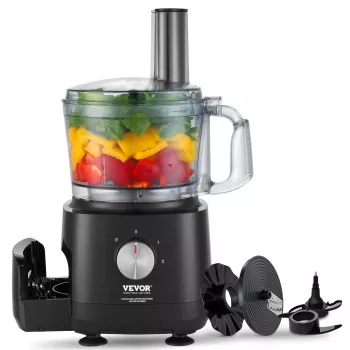
If you’re ready to add a dependable processor to your routine, the 9-Cup Food Processor with 600W Motor for Chopping, Slicing & Dough Kneading is an everyday-capacity option built for the core tasks: chopping, slicing, shredding, and basic dough work.
Product snapshot
More in-stock picks to pair with a busy kitchen routine
FAQ
Can a 600W food processor knead bread or pizza dough?
Yes—typically for small to medium batches. Add liquids gradually, stop once the dough forms a cohesive ball, and avoid long kneading runs that can heat and overwork the dough.
Why are my sliced vegetables uneven?
Uneven slices usually happen when the ingredient fits loosely in the feed tube or when pressure varies while pushing. Trim a flat end, cut pieces to fit snugly, and use steady pressure for more uniform results.
How full should a 9-cup bowl be when chopping?
Leave space so ingredients can circulate around the blade rather than packing to the top. For more even chopping, work in batches and scrape down the sides as needed.
Recommended for you








Leave a comment