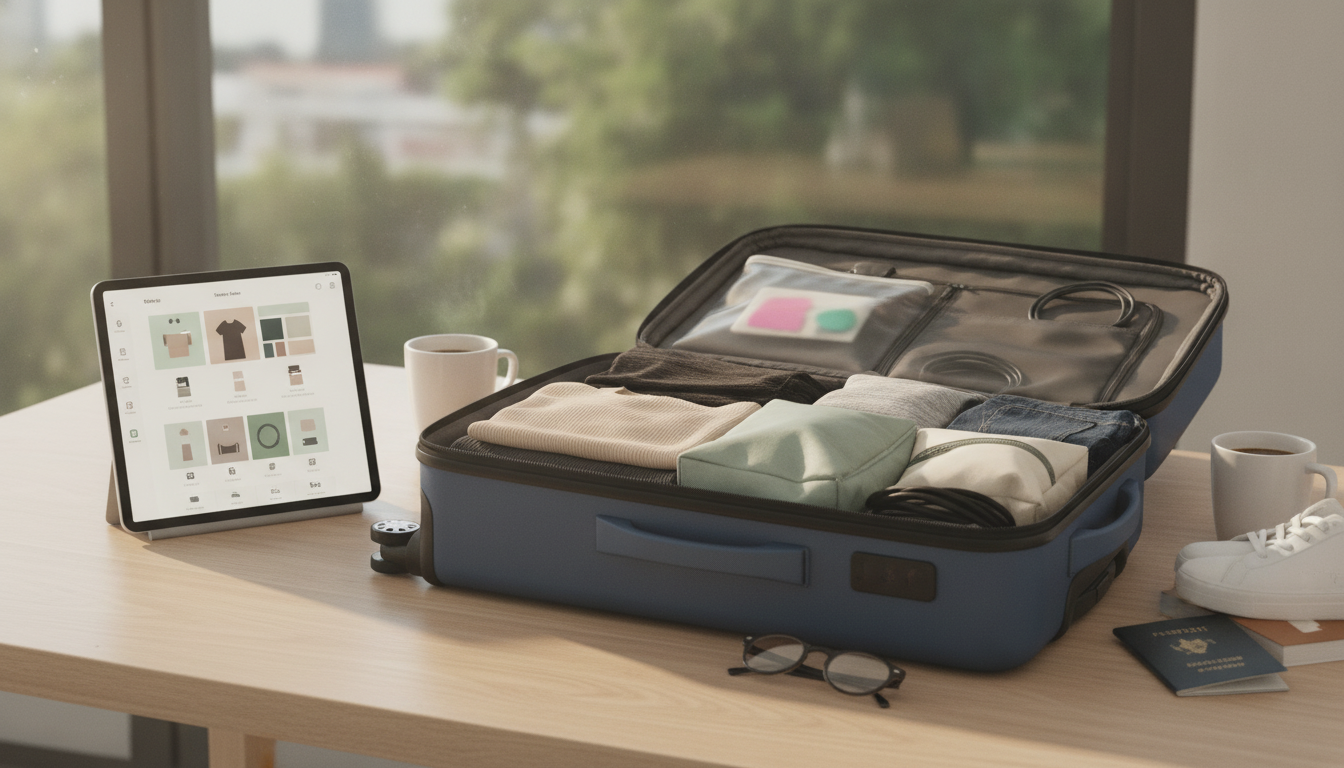
Packing light gets easier when decisions are made before the suitcase opens. A minimalist approach reduces clutter, speeds up airport transitions, and keeps essentials accessible—without the last-minute stress. Below is a simple, repeatable system for building a travel capsule, preventing overpacking, and staying organized from departure to return. If you want to make it even easier to repeat trip after trip, a digital planner can turn your best packing habits into a quick routine.
Minimalist packing isn’t about deprivation—it’s about choosing items that earn their space. The goal is to travel with fewer pieces that still cover real life: commute-to-airport comfort, weather swings, dress codes, and unexpected delays.
If you’re flying, it helps to keep airline baggage expectations in mind early; IATA’s overview is a useful reference for general carry-on and checked-bag concepts: IATA: Baggage Guidance.
Minimalist packing works best when the “thinking” happens first. Five minutes of planning can save you from ten rounds of repacking later.
For a practical health checklist based on your destination (vaccines, advisories, and travel notices), review CDC: Travelers’ Health before finalizing what’s truly essential.
A travel capsule is a small collection of clothes that mix easily and still feels like “you.” Aim for pieces that tolerate repeat wear, layer well, and move comfortably through long days.
| Trip length | Tops | Bottoms | Layer | Shoes | Notes |
|---|---|---|---|---|---|
| Weekend (2–3 days) | 3 | 1–2 | 1 | 1–2 | Aim for one outfit worn + one backup |
| 5–7 days | 4–6 | 2 | 1–2 | 2 | Plan laundry or re-wear strategy |
| 10–14 days | 6–8 | 2–3 | 2 | 2 | Pack for 7 days, refresh mid-trip |
Footwear is where many carry-ons get heavy fast. A simple approach is “one walk-all-day pair + one situational pair.” If you want a versatile neutral sneaker that pairs easily with a capsule palette, consider Calvin Klein Jeans Women’s Beige Sneakers. For a comfortable option that works well for hotel or rental downtime, Birkenstock Women’s Beige Suede Slippers with Buckle and Bow can keep your feet happy without bringing bulky extras.
Once your capsule is chosen, the packing method is what keeps it minimalist. A consistent flow reduces “panic additions” and helps you spot duplicates quickly.
Toiletries are often where minimalist plans break down—mostly due to leaks and overestimating what you’ll use. Keep it clean, compact, and easy to screen.
If you’re flying in the U.S., align your liquids setup with TSA’s 3-1-1 liquids rule to avoid last-second reshuffling at security.
If you want a ready-made system, the Minimalist Travel Packing Planner | Digital Packing Guide for Light, Smart & Stress-Free Trips is designed to organize decisions quickly and keep essentials consistent—without encouraging overpacking.
A good rule is to pack for 5–7 days max and plan to re-wear layers or do laundry for longer trips. Keep a tight color palette so most tops and bottoms mix easily, and rely on one versatile layer to change the look without adding bulk.
Carry documents/ID, medications, phone and charger, valuables, and a small “delay buffer” like a clean top and basic toiletries. This protects you if a checked bag is delayed and keeps the essentials within reach during long travel days.
Use a one-in/one-out rule for extras, and do a removal pass after laying everything out to cut duplicates and single-use pieces. A reusable checklist also keeps decisions consistent, so each trip doesn’t turn into a fresh round of “maybe I need this.”










Leave a comment