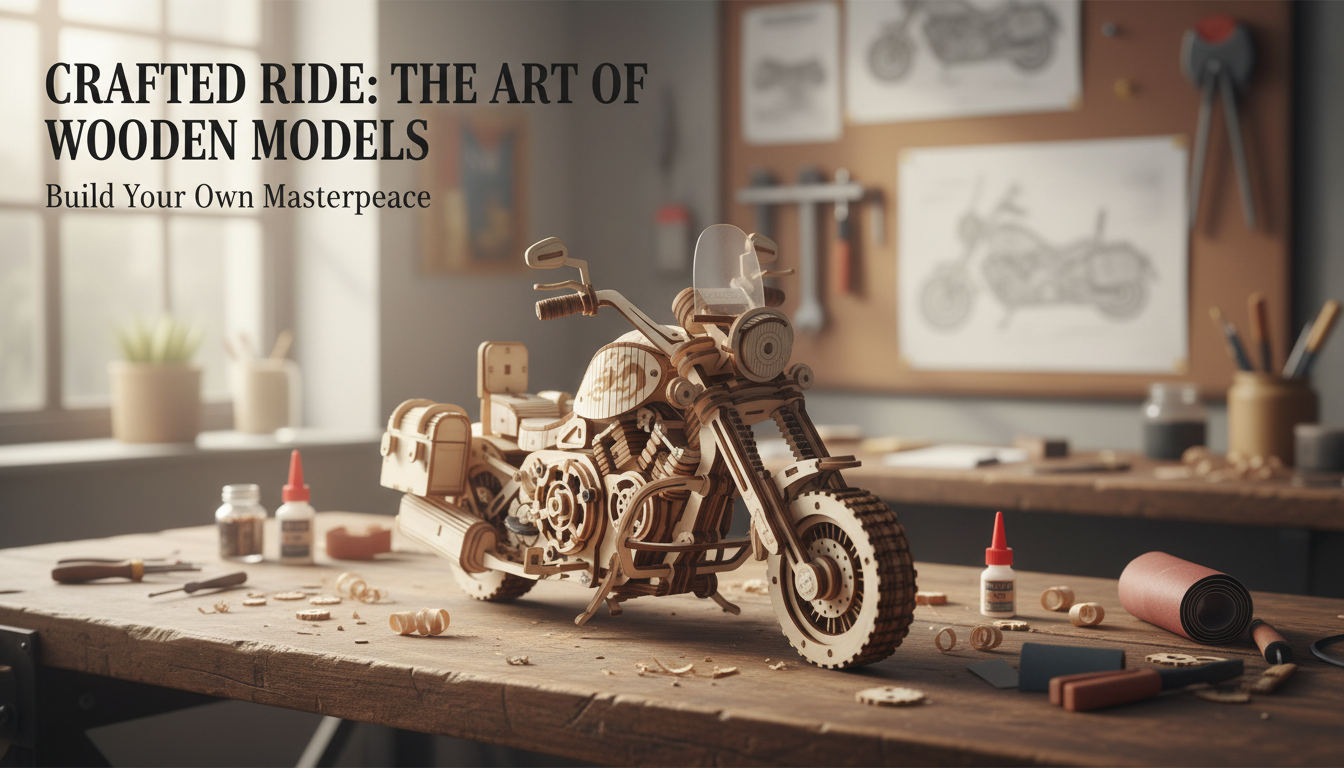
A wooden cruiser motorcycle model kit pairs the calm, step-by-step rhythm of a 3D puzzle with a satisfying mechanical reward: gears that turn, wheels that roll, and a finished piece that looks right at home on a desk or shelf. Unlike many “build it and forget it” projects, a gear-driven wooden motorcycle model invites interaction after assembly—spin a wheel or turn a control point and watch the drivetrain respond.
Below is a practical guide to what makes cruiser-style wooden models special, what typically comes in the box, how the gear mechanism works, and how to get smoother motion and a cleaner finish—whether you’re building for yourself or wrapping it as a gift.
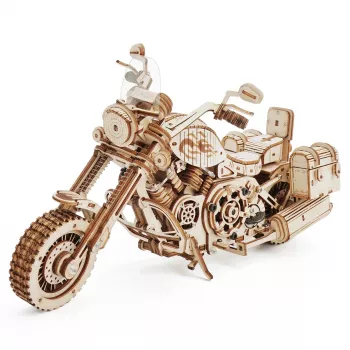
Cruiser-inspired wooden motorcycle kits are designed with display in mind. The silhouette usually features long frame lines, prominent fenders, and a low-slung stance that reads “classic” even without paint or decals. The wood grain becomes part of the look, giving the model warmth and texture that plastic can’t replicate.
The biggest difference, though, is motion. Mechanical gears add realism and transform the project into a functional model rather than a static puzzle. That also changes the building experience: alignment, sequencing, and gentle, even pressure matter as much as patience. When everything seats squarely, the mechanism feels smooth and surprisingly precise for a wood build.
Most wooden cruiser motorcycle kits arrive as pre-cut sheets. Parts press out, then lock together using tabs, slots, pins, and axles—often without traditional screws. Keeping sheets flat until needed can help reduce the chance of warping, which matters when gear teeth need consistent spacing.
You’ll also typically find interlocking wooden gears designed to transfer motion through the model, plus step-by-step instructions. Reading ahead before committing to a tight press-fit can prevent the most common mistake: assembling a sub-section in the wrong order and needing to carefully backtrack.
| Component | Purpose | Tips for Best Results |
|---|---|---|
| Frame and chassis parts | Holds all assemblies in alignment | Dry-fit before pressing fully into place |
| Gear train | Creates moving mechanical action | Ensure gear teeth mesh smoothly; avoid forcing |
| Wheels and axles | Allows rolling and supports motion transfer | Check axle straightness; spin-test each wheel |
| Small connectors and pins | Locks parts together without hardware | Press evenly; use a soft cloth to protect surfaces |
| Decorative panels | Adds the cruiser finish and detail | Install after mechanical testing to prevent scratches |
In most designs, motion begins at a turning point—often a wheel, a manual knob, or a small crank-like control. When you rotate that input, the first gear turns and transfers motion to the next gear through meshed teeth. Each gear pair can change the direction of rotation and adjust speed: larger gears typically rotate more slowly but provide more torque, while smaller gears spin faster.
Smooth movement depends on clean meshing. Gears need to sit squarely in their seats, and axles should rotate freely without rubbing the frame. If anything feels tight, the fix is usually alignment rather than extra force. A tiny skew in a press-fit joint can create friction that multiplies across the gear train.
For a deeper look at why wood behaves the way it does (including movement with humidity), the USDA Forest Service’s Wood Handbook—Wood as an Engineering Material is a solid reference.
A good setup makes the build feel relaxing instead of fiddly. Plan a clear workspace with bright lighting and a flat surface. Small parts are easier to manage if you sort them into shallow trays or bowls as you pop them from the sheets. Try to remove pieces along the grain with gentle pressure to reduce splintering, and lightly sand any rough edge that catches.
If you enjoy the “build, test, refine” rhythm, the Smithsonian Science Education Center’s overview of the engineering design process mirrors the same mindset: iterate early, then finish strong.
If you’re looking for a build-focused gift with moving mechanical features and a cruiser-style profile designed for display, this kit is available now: DIY Wooden Cruiser Motorcycle Model Kit – 3D Puzzle with Mechanical Gears. It’s best suited to builders who want a functional model with gears rather than a simple snap-together ornament.
| Item | Price | Availability |
|---|---|---|
| DIY Wooden Cruiser Motorcycle Model Kit – 3D Puzzle with Mechanical Gears | 45.51 USD | In stock |
Yes—if the kit includes an interlocking gear train and a motion source (such as a wheel-driven input or a manual knob), the gears will turn after assembly. Smooth movement depends on correct alignment and axles that are fully seated without rubbing.
Many wooden 3D puzzle kits are designed around press-fit joints and don’t require glue. If glue is mentioned at all, it’s usually optional and should be used sparingly—especially near moving gears and axles where adhesive can create drag.
Start by checking axle alignment, incomplete seating of frame parts, or debris in the gear teeth. Lightly sanding a rough tab or edge and re-testing the drivetrain before adding decorative panels often restores smooth motion without forcing anything.











Leave a comment