A dual-zone car refrigerator keeps drinks cold and food safely chilled (or frozen) while traveling, camping, or working on the road. With two independently managed compartments and adjustable temperature control, it helps separate items with different storage needs—like frozen meals in one zone and fresh snacks in the other—without relying on melting ice.
What makes a dual-zone car refrigerator different
Unlike a single-compartment cooler, a dual-zone car refrigerator is designed to hold two temperature targets at the same time. That means one side can stay reliably cold for items that must remain frozen, while the other maintains a steady chill for everyday snacks and drinks.
- Two compartments allow different temperature targets at the same time, helping prevent odor transfer and cross-contamination between foods.
- Flexible layouts support common travel needs: freezer + fridge, fridge + pantry-cool, or both set to the same temperature for extra capacity.
- More consistent cooling than ice chests, with less mess and no loss of space to ice.
- Useful beyond road trips: tailgates, beach days, mobile work crews, and backup cooling during power interruptions (with appropriate power stations).
Adjustable temperature control: how to plan your zones
Getting the most out of adjustable temperature control starts with deciding what absolutely needs the coldest conditions. When the “must-freeze” items are assigned to a dedicated zone, the compressor can hold that target with fewer swings, especially if you avoid frequent lid openings.
- Decide the “coldest-needed” items first (ice cream, frozen meat, medical supplies) and assign that to the freezer zone to reduce door openings.
- Use the second zone for items sensitive to freezing (produce, drinks that may burst, dairy) and keep it at a steady chilled setting.
- Pre-chill or pre-freeze contents at home when possible; it shortens pull-down time and reduces strain on the compressor during the first hour of driving.
- Pack by access frequency: everyday drinks and snacks in the easier-to-reach zone; bulk items in the secondary zone.
- Avoid overfilling air vents and corners; airflow gaps help maintain even temperatures and avoid warm pockets.
Common zone setups for travel days
| Use case |
Zone A |
Zone B |
Packing note |
| Weekend road trip |
Freezer for frozen meals |
Fridge for drinks/snacks |
Pre-chill beverages to keep the fridge zone stable |
| Camping base camp |
Deep freeze for meat/ice packs |
Chill for produce/dairy |
Open the freezer zone less often to hold low temps |
| Tailgate/day outing |
Both chilled for max drink space |
Both chilled for max food space |
Use baskets/organizers to prevent item shifting |
| Long-haul work truck |
Freezer for meal prep |
Fridge for daily use |
Restock quickly; minimize lid-open time at stops |
Power options and what to expect in a vehicle
A car refrigerator is only as dependable as the power plan behind it. Vehicle 12V outlets vary widely: some stay powered when the engine is off, while others shut down to protect the starting battery. Knowing which type your vehicle has helps prevent surprises at the end of a long day.
- Confirm compatibility with the vehicle’s 12V outlet and consider whether the outlet stays powered when the ignition is off; many vehicles cut power to prevent battery drain.
- For extended stops, pair with a battery pack or portable power station rated for compressor start-up and continuous draw.
- Keep cables routed away from footwells and seat rails; secure slack to prevent connector strain on rough roads.
- In hot climates, place the unit out of direct sun, allow clearance around vents, and avoid stuffing it against luggage that blocks airflow.
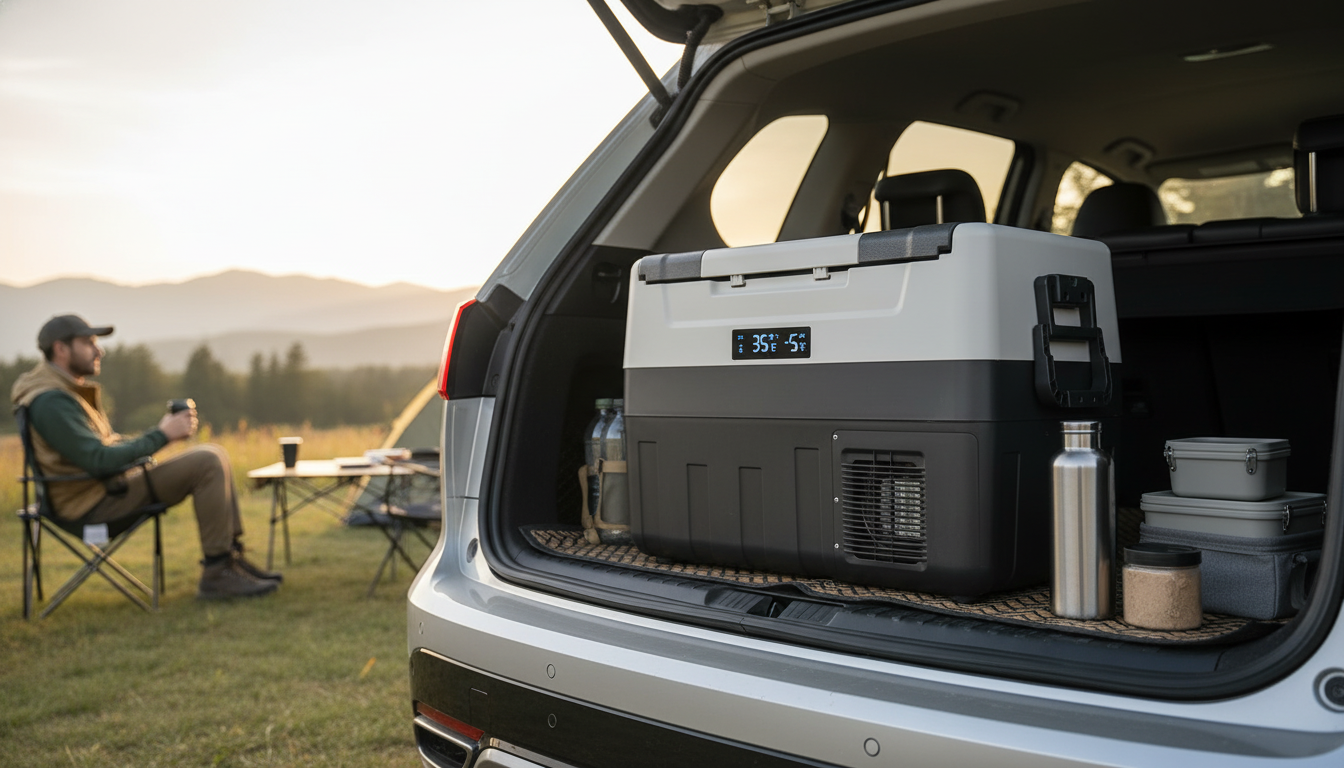
- If used in an SUV or hatchback, consider tie-down points or a non-slip mat to limit sliding during braking.
Food safety matters on the road, too. For practical guidance on safe refrigeration temperatures and timelines, refer to USDA Food Safety and Inspection Service and travel-specific tips from the CDC.
Capacity, footprint, and portability checkpoints
Dual-zone capacity is as much about usable layout as it is about liters. A well-placed unit that opens easily and stays secure will be used more consistently (and opened less often), which helps hold temperature.
- Measure the intended spot (cargo area, behind a seat, truck bed toolbox zone) and verify lid clearance for opening without hitting rear glass or headliners.
- Think in “day counts”: how many meals and drinks need active cooling between resupplies; dual-zone is especially helpful when frozen items reduce frequent store runs.
- Weight matters when loaded; plan for lifting in and out of the vehicle and choose a placement that avoids repeated heavy carrying.
- Organizers (baskets/dividers) help keep items upright, reduce spills, and speed up retrieval so the lid stays open for less time.
- For family trips, keep frequently accessed snacks in the chilled zone and reserve frozen space for long-lasting items to reduce rummaging.
Everyday use tips for steady temperatures
Cleaning, maintenance, and storage
When this style is the right fit
Featured picks available now
FAQ
Can both zones be set to different temperatures at the same time?
Yes. Dual-zone units are built with independent controls so one compartment can run colder (freezer) while the other stays chilled, though results can vary with ambient heat and how often the lids are opened.
Will a car refrigerator drain a vehicle battery overnight?
It can if the 12V outlet stays powered with the ignition off and there’s no low-voltage protection in use. For overnight stops, a dedicated battery pack or portable power station is typically the safer option.
How long does it take to cool down after plugging in?
Cooldown time depends on starting temperature, outside heat, and how warm the contents are. Loading pre-chilled items and keeping the lid closed during the first pull-down period noticeably speeds things up.
Recommended for you











Leave a comment