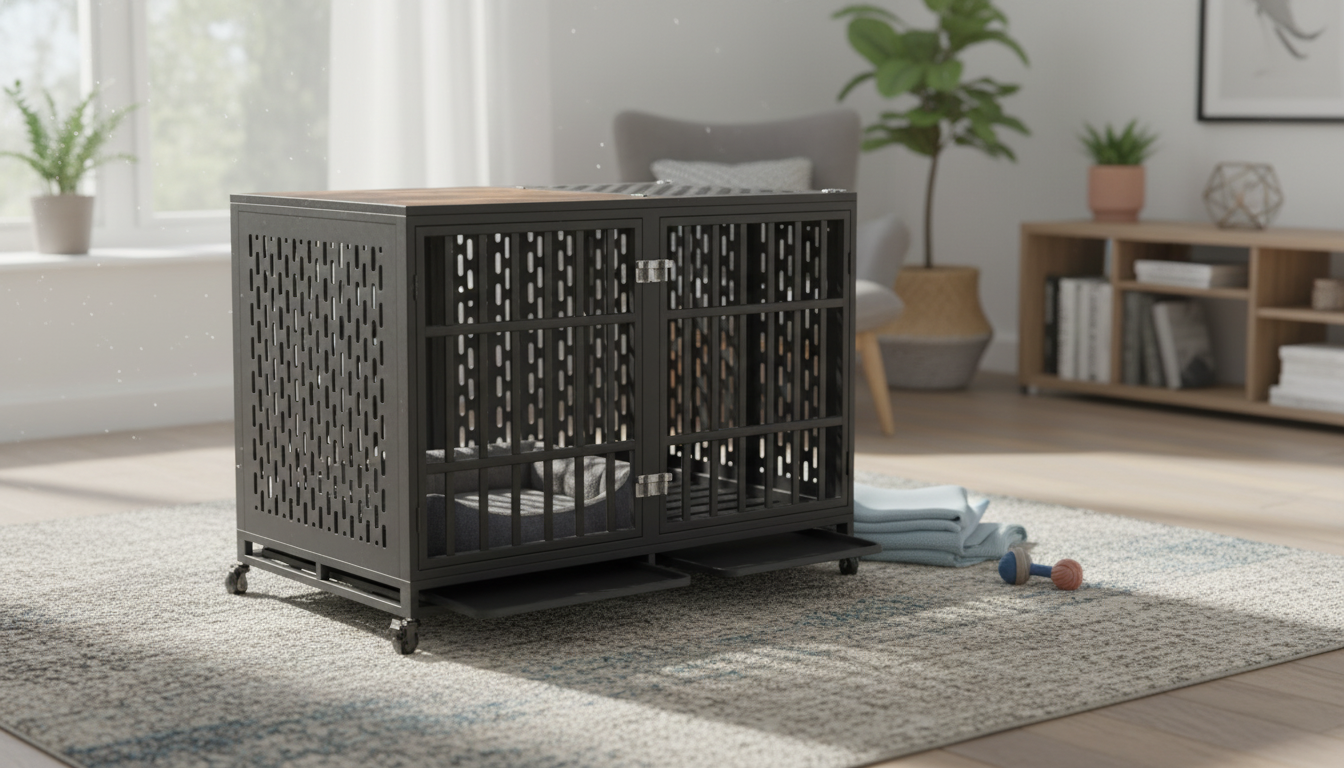
A sturdy crate can make daily routines smoother—whether it’s helping with training, creating a calm resting space, or keeping an energetic dog safely contained. This heavy duty dog crate includes an optional divider for flexible sizing and removable trays to simplify cleanup, making it a practical choice for long-term use.
Not every crate is built for the same job. A “heavy duty” model is typically designed to stay quieter, steadier, and more secure under everyday pressure—especially with strong dogs that lean, paw, or test boundaries.
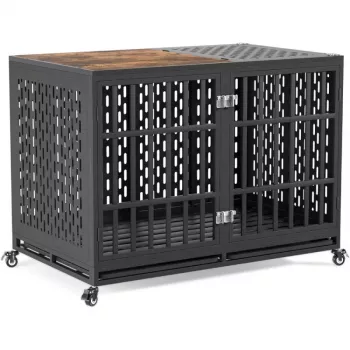
If you’re looking for a durable option that balances containment with day-to-day convenience, see the Heavy Duty Dog Crate with Optional Divider and Removable Trays.
A divider can turn a single crate into a flexible setup that adapts as your dog’s needs change. Instead of buying multiple crates as your puppy grows, a divider helps “right-size” the space while reinforcing calm habits.
For foundational training guidance, the American Kennel Club’s crate training tips and the ASPCA’s crate training overview are helpful references for building positive routines.
Accidents happen—especially during house-training, rainy-day walks, or when water bowls get tipped. Removable trays take the frustration out of cleanup by letting you slide out the mess rather than trying to reach into corners or dismantle the crate.
Consistency matters: quick cleanups reduce lingering odor and help keep the crate feeling like a clean, predictable resting spot rather than a place associated with mess.
The right size and placement can make a crate feel like a safe den instead of a confinement tool. As a general rule, a dog should be able to stand up, turn around, and lie down comfortably. During potty training, the divider can limit extra space so the crate encourages “hold it” habits rather than allowing one end to become a bathroom.
| Item | What to Look For | Why It Matters |
|---|---|---|
| Standing height | Ears not pressed against the top | Reduces stress and poor posture |
| Turn-around space | Dog can pivot without scraping sides | Improves comfort and willingness to settle |
| Divider position | Just enough room to lie down | Supports house-training habits |
| Tray access | Slides out smoothly | Speeds cleanup and reduces odor buildup |
| Latch check | Closes firmly with no play | Improves containment and safety |
Even the best-built crate works best when it’s introduced in a way that feels safe and predictable to your dog. A few small habits can make a big difference in how willingly a dog settles inside.
If you’re working through distress behaviors when you leave, containment alone isn’t the full solution. The AVMA guidance on separation anxiety outlines why gradual training and behavior support can be important alongside management tools.
Set the divider so your dog can stand up, turn around, and lie down comfortably, but doesn’t have enough extra space to use one end as a bathroom. Expand the space gradually as house-training becomes more reliable.
Clean immediately after any accident or spill. For routine maintenance, wash regularly based on use (often weekly) and sanitize more thoroughly if there’s illness, parasites, or repeated soiling.
A strong crate can help with safe containment, but separation anxiety should be addressed with gradual training and behavior support. If distress is severe, professional guidance can help ensure the plan is safe and effective.











Leave a comment