
A high-end mattress is a long-term comfort decision—one that affects sleep quality, recovery, and daily energy. A luxury price tag can reflect better materials and build quality, but it can also hide average components behind plush marketing. Use the checklist below to match construction to your body, compare models quickly, and feel confident about policies like trials and warranties. For more guidance, see How to Choose the Best Luxury Mattress for Ultimate Comfort and ….
Before comparing brands, define how you actually sleep. The “best” mattress on paper can feel wrong if it doesn’t match your position, support needs, and temperature preferences. For further reading, see Choose the Right Mattress for Better Sleep – Consumer Reports.
Mattress “type” is really about how the bed responds under your body—how quickly it rebounds, how much it hugs, and how it handles heat and movement.
| Sleep need | What to look for | Common best-fit types |
|---|---|---|
| Deep pressure relief (side sleepers) | Thicker comfort layer, softer top with supportive transition layer | Hybrid, all-foam, latex with plush top |
| Strong spinal alignment (back sleepers) | Medium to medium-firm feel, supportive core, optional zoning | Hybrid, latex, premium innerspring |
| Minimal hip sink (stomach sleepers) | Firmer surface, resilient comfort layer, strong core support | Hybrid, latex, firmer innerspring |
| Cooler sleeping | Breathable cover, airflow channels, coil support core, latex | Hybrid, latex, innerspring |
| Low motion transfer (couples) | Pocketed coils + foam, or all-foam with quality memory foam | All-foam, hybrid (motion-focused) |
Luxury comfort should come from durable materials—not just extra softness. Ask for specs when they aren’t displayed.
For materials transparency, reputable certification programs can help you compare apples to apples, such as CertiPUR-US for certain polyurethane foams and OEKO-TEX Standard 100 for tested textiles.
| Policy item | What to confirm | Why it matters |
|---|---|---|
| Sleep trial | Total nights, break-in period, condition requirements | Comfort can change after initial settling |
| Returns | Fees, pickup method, refund timeline | Avoid surprise costs |
| Warranty | Indentation depth, exclusions, proof needed | Defines real protection |
| Foundation | Slat spacing, adjustable-base approval | Prevents support issues and warranty voids |
| Delivery | Threshold delivery vs white glove, old mattress removal | Protects convenience and safety |
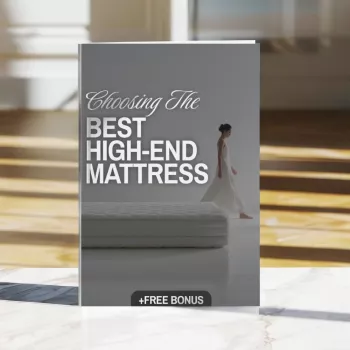
For a ready-to-use version, see Choosing the Best High-End Mattress Checklist (Digital Download).
The best firmness depends on sleep position and body weight: many sleepers land in the medium to medium-firm range, side sleepers often prefer more pressure relief, and stomach sleepers typically need a firmer feel to keep hips from sinking. Prioritize neutral spinal alignment and comfortable pressure relief over a number on a scale.
Hybrids often sleep cooler and feel more supportive and bouncy thanks to coils, while memory foam is usually better for deep contouring and motion isolation. The better choice comes down to whether you value airflow and responsiveness (hybrid) or a quieter, more “hugging” feel (memory foam).
Many quality mattresses last around 7–10 years, with latex often lasting longer and lower-density foams tending to wear sooner. Body weight, usage, and the strength of the support core all affect lifespan, and a long warranty doesn’t necessarily mean the mattress will feel “like new” for the entire term.










Leave a comment