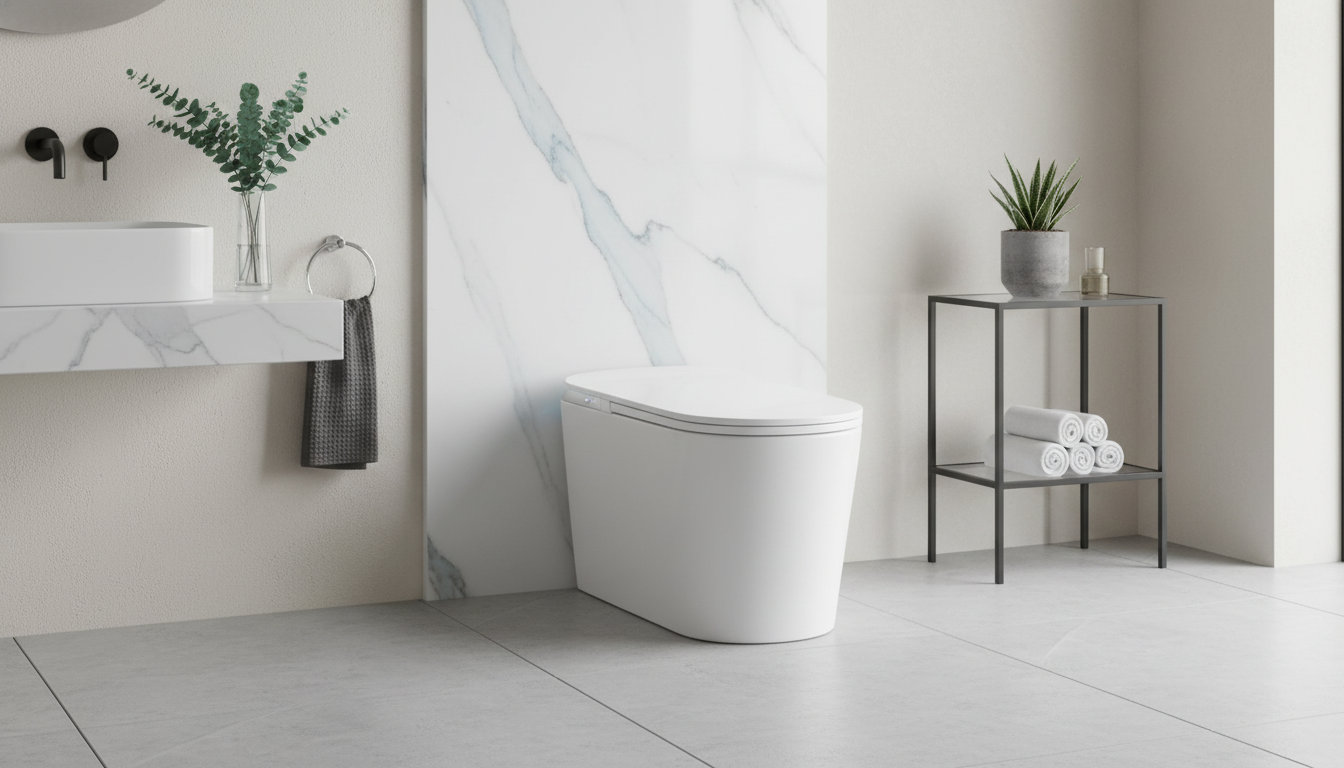
A smart floor-mounted ceramic toilet blends the familiar stability of a traditional toilet with hands-free operation, comfort controls, and built-in hygiene functions. If you’re planning a bathroom upgrade, understanding what the intelligent features actually do—and what your space needs to support them—helps you get the convenience without surprises after delivery.
What Makes a Smart Floor-Mounted Toilet Different
Floor-mounted smart toilets are designed to sit and anchor on the bathroom floor, giving them a footprint and feel many homeowners already prefer. Compared with wall-mounted systems, the floor-mounted format often feels more “traditional” underfoot, while still adding modern automation.
- Stable, familiar installation: Floor mounting provides a secure base and a conventional layout that works well for many retrofits.
- Less-touch routines: Automatic open/close and flush behaviors reduce contact points—especially helpful in shared bathrooms.
- Ceramic durability: A quality ceramic body is non-porous and built for long-term daily use, making it easier to wipe down than materials that can stain or absorb odors over time.
- Comfort + hygiene controls: Intelligent functions typically center on seat comfort, warm-water cleansing, drying options, and convenience features that keep the experience consistent.
Intelligent Features to Expect (and Why They Matter)
Not every smart toilet includes every feature, and some functions are more useful than they sound on paper. The best approach is to focus on the features that impact daily comfort and cleaning the most.
- Automatic lid/seat operation: Helps reduce contact and can improve accessibility for users who have limited mobility or balance concerns.
- Hands-free or assisted flushing: Makes cleanup simpler, particularly in busy households where the bathroom sees constant use.
- Integrated cleansing: Common on smart toilets, bidet-style washing can improve hygiene and reduce dependence on paper products.
- User presets: When available, presets let multiple people quickly return to preferred nozzle position, temperature, or seat settings.
- Control style: Side panels and remotes both work well—choose the option that feels intuitive for guests and easy for everyday reach.
- Noise considerations: Soft-close mechanisms and configurable behaviors can matter a lot for nighttime use or bathrooms near bedrooms.
Feature Guide: What It Does and What to Check
| Feature Area |
What It Helps With |
What to Verify Before Buying |
| Automatic open/close |
Less contact, easier access |
Sensor placement, response sensitivity, manual override |
| Automatic flushing |
Convenience and cleanliness |
Flush options, reliability during low water pressure, backup operation |
| Cleansing functions |
Hygiene and comfort |
Adjustable position/pressure, nozzle self-cleaning, temperature controls |
| Heated seat |
Comfort in cold seasons |
Temperature range, warm-up time, energy-saving mode |
| Drying (if included) |
Reduced paper use |
Fan strength, adjustable temperature, noise level |
| Deodorization (if included) |
Fresher bathroom air |
Filter type, replacement availability, effectiveness during extended use |
Comfort, Hygiene, and Everyday Usability
Daily satisfaction usually comes down to how easy the toilet is to use without thinking about it. Look for controls that are clear, predictable, and easy for guests to understand on the first try.
- Intuitive controls: Clearly labeled buttons and straightforward settings reduce confusion for older family members and visitors.
- Easy-to-wipe design: Smooth ceramic surfaces and fewer seams can make quick cleanups faster, especially around the base.
- Nighttime use: If your model includes lighting and quieter operation, it can reduce disruption while still keeping the bathroom usable.
- Multi-user consistency: Adjustable settings (and user profiles when included) help a shared bathroom feel personalized without constant readjustment.
- Most impactful upgrades: Hands-free behaviors and self-cleaning nozzle routines tend to provide the biggest real-world cleanliness benefits.
For a premium option that combines a ceramic build with intelligent everyday functions, consider the Smart White Floor-Mounted Automatic Ceramic Toilet with Intelligent Features.
Installation and Bathroom Compatibility
- Rough-in and drain location: Verify the rough-in measurement and confirm the existing drain aligns with the toilet’s specifications.
- Power requirements: Smart toilets commonly require a nearby GFCI outlet. If you don’t already have one in reach, schedule electrical work ahead of time and follow applicable safety rules such as NFPA 70 (National Electrical Code).
- Water supply access: Ensure the shutoff valve is reachable so the unit can be serviced without removing the toilet.
- Clearance planning: Measure side-to-side space and front clearance for comfortable seating and full lid opening.
- Remodel coordination: If tile, baseboards, or outlet placement are changing, align these decisions early to avoid rework.
When selecting models or planning a remodel, it can also be useful to reference recognized plumbing guidance and standards from organizations such as the International Association of Plumbing and Mechanical Officials (IAPMO).
Cleaning, Maintenance, and Long-Term Ownership
If water efficiency is a priority, consider checking product specifications and household goals against resources like EPA WaterSense.
Who This Style of Smart Toilet Fits Best
Recommended In-Stock Picks
FAQ
Does a smart toilet need a power outlet?
Yes—most intelligent functions (heated seat, sensors, washing, drying, and deodorization) require electricity. Plan for a nearby GFCI outlet and confirm whether any basic functions still work during a power outage.
Are smart toilets harder to clean than standard toilets?
Not necessarily: smooth ceramic surfaces can be quick to wipe down, and some models reduce grime-prone seams. You’ll just want to clean more gently around sensors, control panels, and electrical areas to avoid moisture intrusion.
What should be checked before installation?
Verify rough-in and drain compatibility, confirm the water shutoff valve is accessible, measure clearance for the lid and seating space, and ensure a GFCI outlet is within reach. Double-check measurements before delivery so installation can happen without delays.
Recommended for you












Leave a comment