Marble Furniture Styling Checklist for Modern Living, Dining, and Office Spaces
Marble brings instant polish, but it looks best when the surrounding pieces support its color, veining, and shine. Use the checklist below to balance hard and soft materials, control visual weight, and keep marble feeling intentional rather than cold—whether styling a coffee table, dining table, desk, or console.
Start With the Marble: Color, Veining, and Finish
Before adding decor, treat your marble top like a “palette.” The base tone, veining pattern, and finish tell you what will look calm, what will feel busy, and which accents will pop.
- Identify the base tone (cool white/gray, warm cream/beige, or dramatic black/green) and let it guide nearby textiles and wood tones.
- Match veining scale to the room: bold veining reads like art and needs quieter surroundings; subtle veining can handle more pattern nearby.
- Note the finish: polished reflects light and highlights fingerprints; honed feels softer and pairs easily with matte accents.
- Decide the role: hero piece (center stage) or supporting surface (quiet anchor). If marble is the hero, limit competing statement materials.
Quick Pairing Guide for Common Marble Looks
| Marble look |
Best supporting materials |
Accent colors that work |
Avoid when possible |
| White with gray veining |
Oak, walnut, brushed nickel, boucle, linen |
Charcoal, navy, sage, black, muted blush |
Too many bright whites; high-gloss everything |
| Cream/beige marble |
Warm woods, aged brass, rattan, textured ceramics |
Terracotta, olive, chocolate, warm gray |
Icy grays and stark cool lighting |
| Black marble |
Smoked glass, walnut, matte black metal, leather |
Ivory, camel, emerald, deep rust |
Cluttered surfaces; tiny busy patterns |
| Green marble |
Brass, walnut, travertine accents, velvet |
Cream, black, ochre, muted pink |
Overmatching green everywhere |
Balance Visual Weight and Proportions
Marble reads visually “heavy,” even in lighter colors—because it’s solid, reflective, and patterned. Good styling is mostly about counterbalance.
- Counterweight the slab: pair marble with lighter upholstery, open-leg furniture, slim frames, or a hint of glass.
- Use the 60/30/10 approach: 60% dominant neutral, 30% supporting tone (wood/metal), 10% accent pulled from veining or nearby art.
- Respect scale: large slabs look best with fewer objects; smaller tops can handle 3–5 layered pieces without feeling crowded.
- Watch the edges: rounded profiles feel softer and casual; sharp edges feel architectural and benefit from plush textures nearby.
Layer Textures to Warm Up Stone
Texture is what keeps marble from feeling cold or “showroom perfect.” The goal is a mix of tactile surfaces that look inviting from across the room.
- Add at least two soft textures within sight of the marble: a rug, curtains, upholstered dining chairs, or a throw on adjacent seating.
- Mix matte with shine: pair polished marble with matte ceramics, linen, plaster, or unfinished wood so the surface doesn’t feel overly formal.
- Bring in organic texture: woven baskets, cane, dried stems, greenery, or a raw-wood tray can soften the stone’s precision.
- Repeat one complementary texture twice (boucle chair + boucle pillow, or linen runner + linen curtains) for cohesion without matching sets.
Room-by-Room Styling Checklists
Living Room (Coffee Table, Side Table, Console)
- Build a triangle of heights: a low tray, a medium object (candle or bowl), and a tall element (vase or stem) creates instant structure.
- Leave 30–40% clear: marble looks best when it still reads as a clean plane—and you still have room to set down a drink.
- Anchor with the right rug: choose a rug large enough that at least the front legs of surrounding seating sit on it to keep the marble piece grounded.
Dining Room (Marble Dining Table)
- Choose tactile, comfortable chairs: upholstery, cane backs, or curved wood helps counter marble’s cool sleekness.
- Keep the centerpiece low: aim for clear sightlines across the table; use a shallow bowl, low florals, or grouped candles.
- Reduce clatter and add warmth: placemats or a runner protect the surface and soften the sound of dishes.
Office (Marble Desk or Console Desk)
- Simplify to 2–3 materials: stone + wood + metal is enough for a modern look that feels calm.
- Hide the mess-makers: concealed cable management keeps the marble from turning into a visual “to-do list.”
- Create a working zone: add a desk mat, leather blotter, or wool pad to reduce glare and make the surface comfortable for daily use.
Styling Formulas That Look Finished (Without Clutter)
Lighting, Placement, and Everyday Care
For stone-specific care guidance, the Natural Stone Institute is a reliable reference. For broader space-planning ideas, visit the American Institute of Architects.
Printable Checklist and Quick Reference Guide
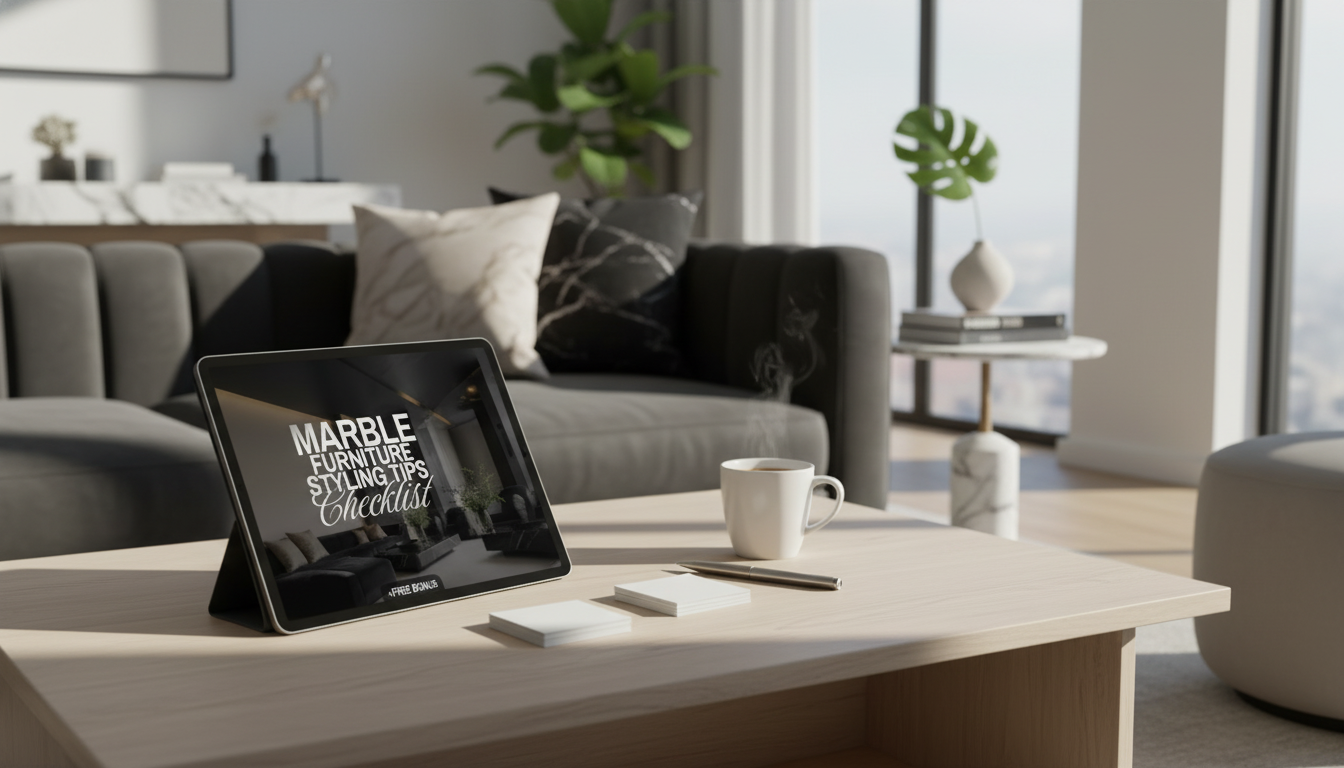
If you want a ready-to-use guide you can keep on your phone or print, see the Marble Furniture Styling Tips Checklist (digital download).
For a small extra styling move that reads warm and modern next to many marble palettes (especially cream or white marble with beige accents), neutral footwear can help tie an entry vignette together—like Calvin Klein Jeans Women’s Beige Sneakers for a clean, tonal look near a marble console.
FAQ
What colors go best with white marble furniture?
Pull your main tones from the veining first (charcoal and soft grays), then choose one accent like navy, sage, or muted blush. Warm it up with natural wood tones and soft textiles, and avoid stacking too many bright whites around it.
How do you make marble furniture feel warmer and less formal?
Layer soft, matte textures like linen, boucle, and a wool rug, then add a warmer metal such as aged brass. Organic elements—wood trays, woven pieces, or greenery—also soften the stone’s crisp look.
How do you style a marble coffee table without making it look cluttered?
Use a simple formula (tray + one or two books + one sculptural object) and keep 30–40% of the surface empty. Vary heights, stay within a tight color palette, and limit the total number of items.
Recommended for you











Leave a comment