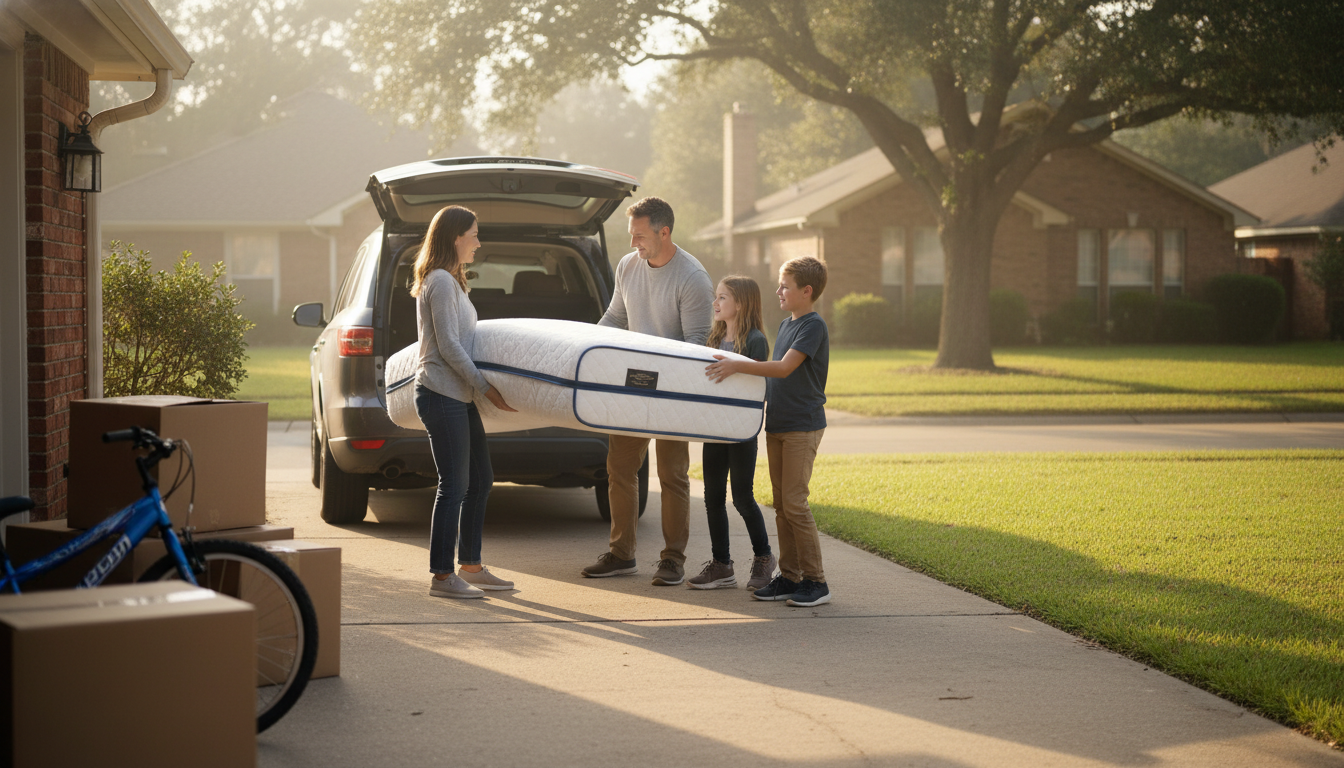
Edge support can be a deciding factor in whether a premium mattress feels truly “finished” and functional day to day. It refers to how stable the perimeter stays when sitting or sleeping near the edges. A high-end mattress can have excellent pressure relief and still feel less luxurious if the sides compress too easily or make the surface feel smaller than it is.
Strong edge support helps the mattress maintain a consistent feel from center to perimeter. If the edges collapse, sleepers may unconsciously drift toward the middle, which can make a queen or king feel less spacious. Couples often notice this most—good edge support lets each person use more of the surface without feeling like they’ll roll off.
Many people sit on the edge to put on shoes, stand up, or reposition. A stable edge feels supportive and reduces that “sliding” sensation. This is especially valuable if the bed is taller, the foundation is firm, or the mattress is on a platform where the edge is frequently used like a seat.
Edge support tends to be more important for combination sleepers who move around, couples sharing a bed, and anyone who regularly sits on the edge. It can also be a meaningful quality-of-life feature for people who prefer sleeping close to the perimeter or want a mattress that feels stable when entering and exiting the bed.
Premium models often reinforce the perimeter with denser foam rails, thicker coils around the edge, or zoned coil systems designed to limit sinkage. When comparing options, consider how the edge feels under seated weight and whether the support remains consistent along the long sides and corners.
For a deeper breakdown of how edge support affects performance and what to watch for when shopping, visit this detailed guide on mattress edge support.
Innerspring and hybrid mattresses often provide stronger edge support because their coil systems can be reinforced around the perimeter. All-foam beds can still have solid edges, but the design needs dedicated edge reinforcements to prevent sinkage.











Leave a comment