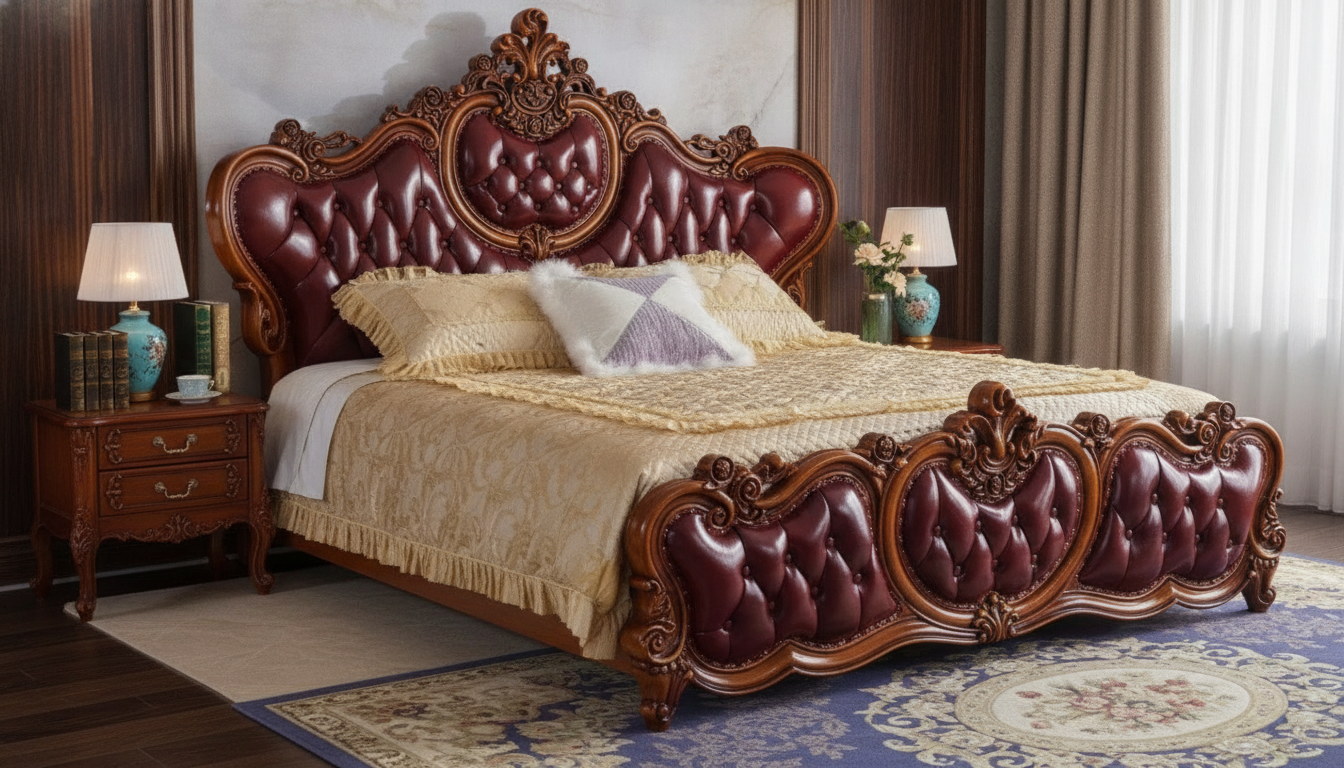
An elegant solid wood bed frame anchors a bedroom with warmth, stability, and a timeless presence that looks “finished” even with simple bedding. The right frame should do more than hold a mattress—it should feel quiet, substantial, and intentionally designed, with details that read as furniture-grade from across the room. Below is a practical guide to materials, support, sizing, finishing touches, and care so a king bed looks refined and performs reliably night after night.
Elegance is usually the sum of small decisions that work together. Clean proportions are the starting point: rails that don’t look flimsy, legs that feel balanced, and a headboard that has presence without overpowering the room. Solid wood helps because the grain adds depth and natural variation—especially when the joinery and seams look consistent rather than patchy or mismatched.
A polished silhouette matters, too. When the headboard height, leg profile, and rail thickness share the same “visual language,” the bed reads cohesive instead of pieced together. Finish is another big tell: a smooth, even surface that looks intentional (not overly glossy or plastic-like) tends to feel more high-end in both modern and classic bedrooms. Finally, performance affects perception. Minimal squeaks, stable corners, and a planted feel keep the entire setup looking—and feeling—refined.
Solid wood is often chosen for its longevity and the option to refresh the surface over time. When a finish gets worn, a solid wood frame may be repairable or refinishable, depending on construction and coating. Engineered options can be cost-effective and attractive, but deep chips or edge damage can be harder to disguise—especially when the core material is exposed.
Another difference is normal wood movement. Solid wood expands and contracts with seasonal humidity changes; well-built frames account for this with construction that allows slight movement without loosening up. Weight and rigidity also play into day-to-day satisfaction: heavier frames with thicker rails and robust center support tend to feel calmer under a king mattress.
| Feature | Solid Wood | Engineered Wood/MDF | Metal |
|---|---|---|---|
| Look & warmth | Natural grain and depth | Can look uniform; often veneer-based | Crisp lines; cooler feel |
| Durability | High when well-built | Varies; edges can be vulnerable | High; can creak if joints loosen |
| Repair/refinish | Often repairable/refinishable | Limited repair options | Paint/tighten hardware |
| Weight/stability | Usually heavy and stable | Moderate; depends on structure | Varies; can be very stable |
Most standard king mattresses measure about 76 in x 80 in, but it’s still smart to confirm the manufacturer’s dimensions before ordering a frame—especially with pillow-top or specialty styles. A helpful reference is the Sleep Foundation’s king mattress size guide.
Beyond mattress size, pay attention to interior clearance and the slat/deck dimensions so the mattress sits securely without shifting. Room planning matters just as much: comfortable pathways around the bed are commonly 24–36 inches, depending on your layout and how tight the space is. If the room is smaller, prioritize clearance on the sides you use most; in larger rooms, symmetrical spacing often looks more polished.
Don’t forget real-world logistics. Measure doorways, stairwells, elevators, and tight turns to make sure delivery and assembly are practical. If you’re using a headboard, check total height in relation to windows, wall art placement, and ceiling lines so the bed doesn’t compete with architectural features.
Because wood responds to humidity, aim for relatively stable indoor conditions to reduce excessive expansion or contraction. It also helps to re-tighten hardware periodically, especially after moving or when seasons change. When minor scratches happen, address them early with touch-up methods suited to your finish type, and follow care guidance on textiles and bedding where relevant (general reference: Federal Trade Commission textile labeling guidance).
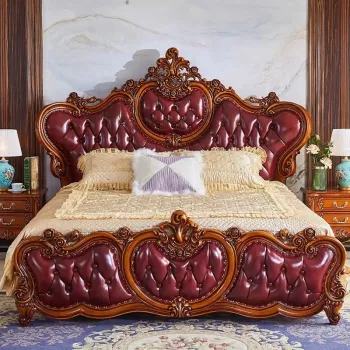
If the goal is a polished, furniture-grade foundation for a king mattress, the Elegant Solid Wood King Size Bed Frame is designed to bring a refined, statement look to the bedroom while highlighting the natural character of solid wood. Pair it with a supportive mattress and quality bedding to complete the tailored, finished feel.
Before ordering, confirm room measurements, your delivery path, and any mattress support requirements (particularly for heavier mattresses or specialty constructions). For a cohesive bedroom routine, comfortable at-home footwear can also complement a calm, put-together space—options currently available include Birkenstock Women’s Beige Suede Slippers with Buckle and Bow and Calvin Klein Jeans Women’s Beige Sneakers.
| Item | Details |
|---|---|
| Product | Elegant Solid Wood King Size Bed Frame |
| Availability | In stock |
| Price | 8669.80 USD |
| Product page | https://roomtreasures.shop/elegant-solid-wood-king-size-bed-frame/ |
Often, yes. A center rail with supporting legs helps prevent sagging across the wider span of a king bed, improves mattress support, and can reduce motion transfer and noise.
It can if hardware loosens, friction points develop, or the frame sits unevenly on the floor. Periodically tightening bolts, using pads at contact points, and assembling the frame carefully helps keep it quiet; sturdier joinery typically reduces squeaks.
A common guideline is about 24–36 inches of clearance for walking paths, adjusted for room size and layout. Remember to account for nightstands, dresser drawers, and door swings so the space functions comfortably day to day.











Leave a comment