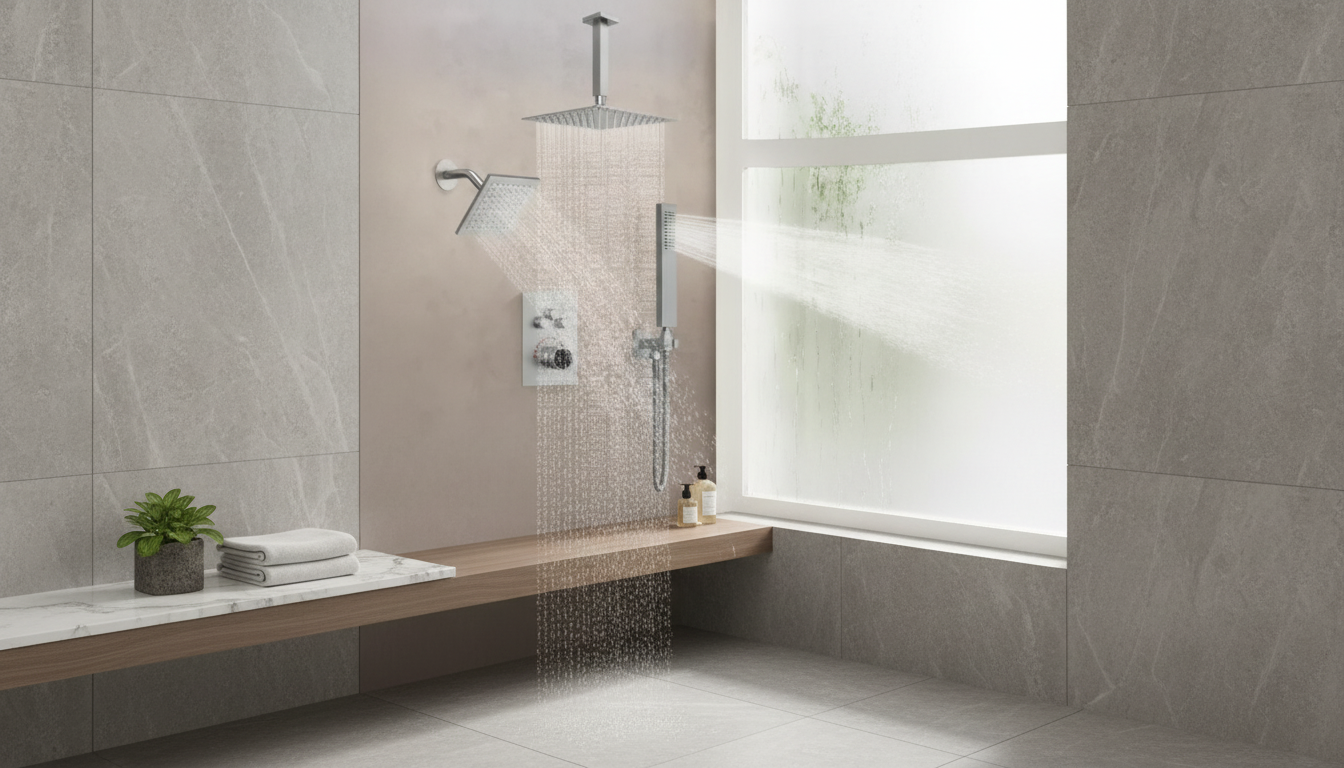
A thermostatic shower system is designed to keep water temperature steady while delivering a spa-like rinse through a wide rainfall head and a flexible handheld. With dual shower heads available in one setup, it supports quick weekday showers, targeted rinsing, and a more relaxing full-body flow—while helping reduce sudden hot/cold swings during pressure changes elsewhere in the home.
Upgrading to a thermostatic rainfall shower system isn’t just about aesthetics. The biggest difference is how the shower behaves when real life happens—someone starts the dishwasher, a toilet flushes, or a second bathroom faucet turns on.
For many households, the “luxury” part ends up being the everyday predictability—less fiddling with the handle and fewer mid-shower surprises.
Thermostatic systems vary by configuration, but the best ones balance comfort, safety, and practical control. Before choosing a set, pay attention to these core elements:
If water efficiency is a priority, it’s also worth reviewing guidance on showerhead performance and efficiency from the U.S. Environmental Protection Agency (EPA) WaterSense program.
The most practical reason to choose a dual-outlet setup is that it adapts to the way people actually shower. A rainfall head feels great when you want an immersive rinse, while a handheld is hard to beat for precision and cleanup.
| Task | Rainfall Head | Handheld | Why it helps |
|---|---|---|---|
| Quick morning rinse | Yes | Optional | Wide coverage speeds up a basic wash |
| Rinsing thick hair/conditioner | Optional | Yes | Directional spray improves rinse-out control |
| Cleaning shower walls and corners | No | Yes | Better reach and focus for grime-prone areas |
| Relaxation/soothing rinse | Yes | Optional | Even, gentle coverage supports a calmer feel |
| Bathing kids or pets | No | Yes | Controlled spray reduces splashing and improves handling |
A thermostatic shower system is a bigger upgrade than swapping a basic showerhead, so it helps to confirm a few details before committing—especially if you’re remodeling or replacing a valve behind the wall.
If you’re replacing an older setup, it’s also smart to check that the hot and cold supply lines are properly identified—temperature stability depends on correct routing.
Thermostatic control adds a layer of safety, but smart settings and habits matter too—especially for homes with children, older adults, or anyone with sensitive skin.
For additional prevention guidance, the Consumer Product Safety Commission (CPSC) scald prevention resource outlines practical steps to reduce burn risks at home.
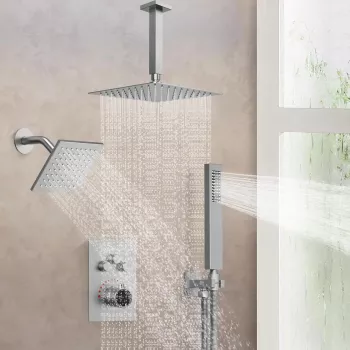
If the goal is a controlled, comfortable shower that still handles real-life routines, consider the Bathroom Thermostatic Rainfall Shower System with Dual Shower Heads & Handheld. It’s designed to combine steady temperature control with a wide rainfall head and a versatile handheld sprayer—making it a strong fit for bathrooms where comfort, convenience, and routine flexibility matter.
For a practical post-shower add-on—especially on cold tile—Birkenstock Women’s Beige Suede Slippers with Buckle and Bow can pair nicely with a refreshed bathroom routine, helping keep feet warm and supported right after stepping out.
A thermostatic valve mixes hot and cold water to maintain a set temperature more consistently. That helps reduce sudden hot or cold swings when water pressure changes elsewhere in the home.
It depends on the diverter and valve design. Some systems switch between outlets, while others may allow shared flow—so it’s important to confirm the specific control configuration before buying.
Wipe it regularly to prevent mineral spots, and descale the spray face periodically (often with a vinegar-based method if the manufacturer allows it). Avoid abrasive pads or harsh cleaners that can damage the finish.







Leave a comment