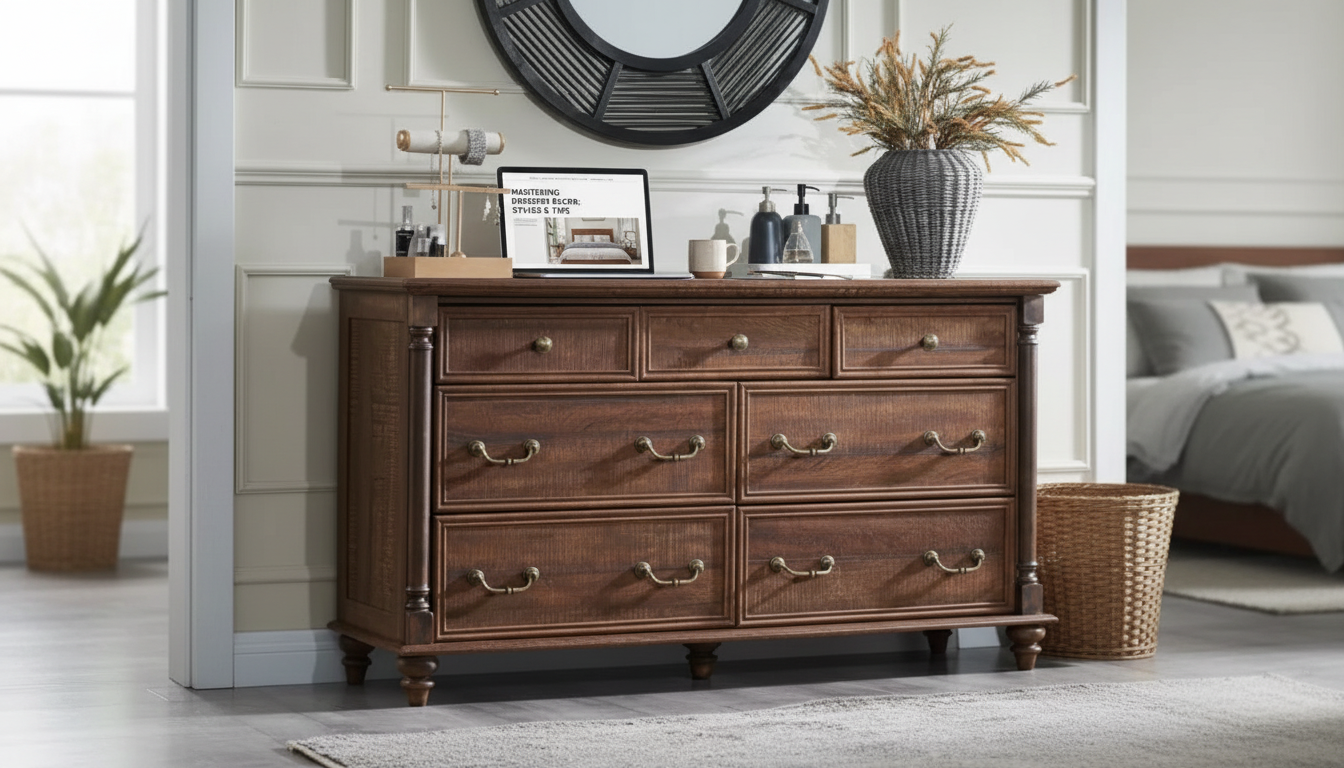
A farmhouse dresser should balance warm character with everyday function—sturdy support, smooth drawers, and details that feel intentional. This 7-drawer design pairs solid wood legs with rustic column accents for a grounded look that works in bedrooms, guest rooms, and larger closets while keeping clothing and linens organized.
What Makes This Dresser Feel Farmhouse
- Rustic column accents add architectural depth that reads classic and handcrafted—an easy way to make storage feel like a true furniture piece.
- Solid wood legs provide a more substantial, furniture-grade stance compared with fully composite bases, helping the silhouette feel lighter while staying stable.
- A multi-drawer layout supports a tidy “everything has a place” setup—tees, denim, sweaters, and accessories each get a dedicated home.
- The overall silhouette fits modern farmhouse, cottage, and relaxed traditional spaces without feeling overly ornate, so it layers well with both vintage and newer décor.
Storage Layout: Making 7 Drawers Work for Daily Routines
Seven drawers can feel like “extra” storage—until a busy week hits. The easiest way to make this dresser work hard is to assign each drawer a purpose and keep the heaviest categories balanced.
- Assign drawers by category to reduce morning clutter: tops, bottoms, sleepwear, workout, undergarments, accessories, and seasonal overflow.
- Use simple organizers (bins or dividers) in smaller drawers to prevent mixing socks, belts, and jewelry.
- Fold bulky knits and denim to avoid overstuffing and keep drawers gliding smoothly over time.
- Reserve one drawer for linens in guest rooms to keep spare pillowcases and throw blankets close at hand.
Sample Drawer Plan for a 7-Drawer Setup
| Drawer |
Best For |
Tip |
| 1 |
Everyday tops |
Front-load most-used items for quick grab-and-go. |
| 2 |
Denim and pants |
Stack by type to keep heavier items from shifting. |
| 3 |
Sleepwear and loungewear |
Roll lighter pieces to maximize space. |
| 4 |
Workout gear |
Group sets together to streamline routines. |
| 5 |
Undergarments |
Add dividers for socks, bras, and underwear. |
| 6 |
Accessories |
Use small trays for belts, ties, and jewelry. |
| 7 |
Seasonal overflow |
Rotate items here each season to keep the top drawers light. |
Materials and Build Details to Look For
- Leg construction: solid wood legs help with stability and can reduce wobble on carpet or slightly uneven floors. If your room has plush carpet, wider furniture pads can help distribute weight and protect fibers.
- Drawer usability: prioritize consistent alignment and smooth open/close. Even a well-built dresser benefits from sensible loading—avoid packing one drawer far heavier than the rest.
- Finish and texture: farmhouse pieces often look best with a slightly matte or softly distressed feel rather than a high-gloss shine, especially alongside textured bedding and woven accents.
- Hardware and pulls: simple, durable pulls complement rustic accents and are easy to replace if a style refresh is needed later (for example, swapping from dark metal to a warmer brass tone).
For households with kids or high-traffic bedrooms, tip-over prevention matters as much as looks. Following guidance like the CPSC’s recommendations to anchor dressers can add an important layer of safety: CPSC Furniture Safety: Prevent Tip-Overs (Anchor It!).
Placement and Room Styling Ideas
- Bedroom: anchor it on the longest wall to visually balance the bed; leave comfortable clearance for drawers to open fully (including enough room to stand and sort).
- Guest room: top it with a mirror and a tray for essentials (water, tissues, spare phone charger). Keeping surfaces “ready to host” makes the whole room feel more finished.
- Closet or dressing area: pair with open shelving above for baskets and folded items to extend storage vertically without needing another bulky case piece.
- Style with contrast: mix soft linens, a ceramic lamp, or simple framed art to keep rustic details from feeling heavy. A small vase, a low bowl, or a single stack of books often looks calmer than lots of tiny décor items.
If you’re tucking textile items like throws or spare pillowcases into the drawers, follow care instructions so fabrics stay fresh and don’t transfer dyes or lint—especially for new pieces. The FTC’s overview of textile care labeling is a helpful reference: FTC Care Labeling Rule (Textile Care Information).
Care, Protection, and Long-Term Use
When This Dresser Is the Right Fit
In-Stock Picks to Complete the Space
FAQ
Do solid wood legs make a difference on carpet or rugs?
Yes—solid wood legs typically provide a sturdier feel and can reduce wobble, especially when the dresser is loaded. If the floor is uneven, leveling with furniture pads (or adjustable glides, if included) helps, and wider pads can also protect carpet and rug fibers.
How should drawers be loaded to keep them operating smoothly?
Distribute weight across drawers, avoid overstuffing, and use organizers so items don’t shift and jam. Keeping heavier items in lower drawers can also improve overall balance and reduce stress on the upper drawer glides.
What decor pairs well with rustic column accents?
Warm neutrals, textured textiles, pottery, woven baskets, and simple framed art complement the architectural detail without competing with it. Black or brass accents work especially well, and keeping the top surface lightly styled prevents the look from feeling heavy.
Recommended for you












Leave a comment