Vintage Indoor Pet Crate That Doubles as a Table
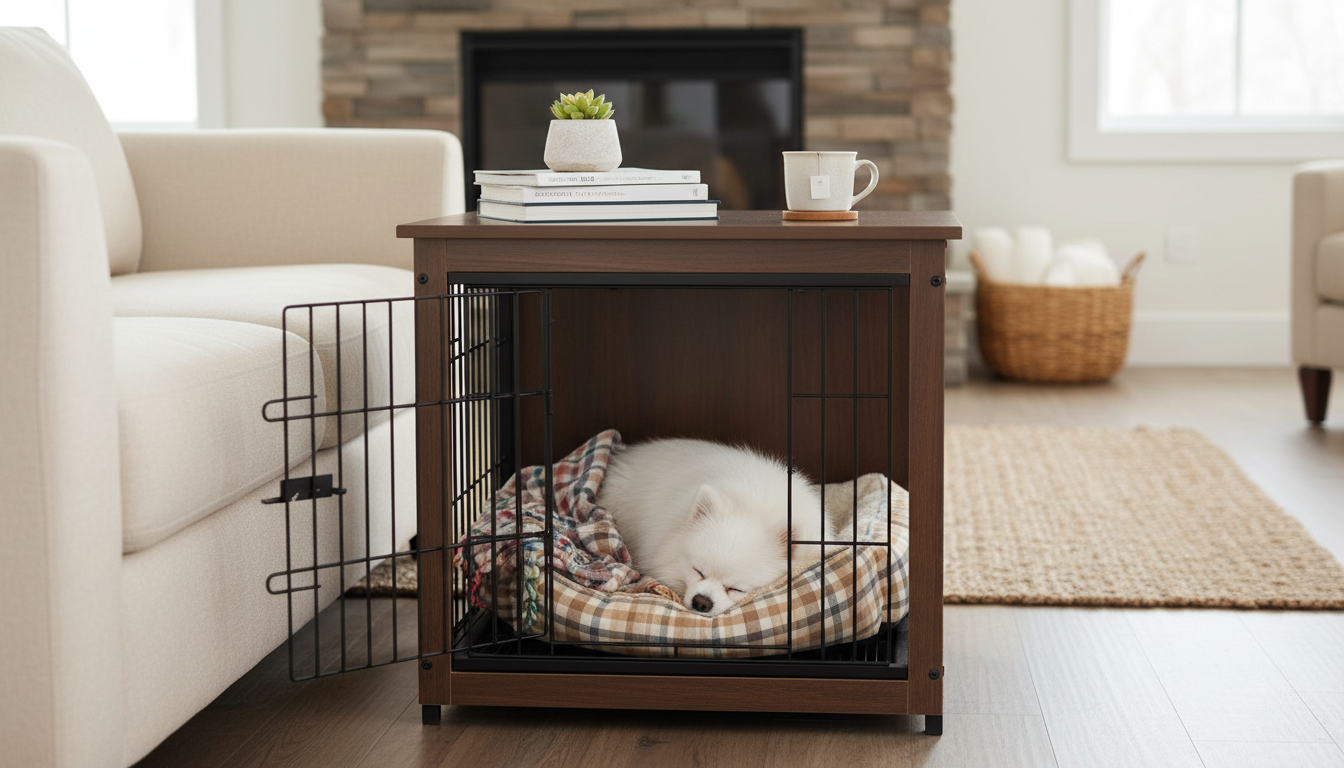
A furniture-style pet crate helps an indoor space feel pulled together while still giving a dog a secure spot to settle. This vintage-inspired design pairs a sturdy enclosure with a usable tabletop, a wooden barrier-style gate, and a slide-out floor tray meant to make everyday cleanup less of a chore—especially in the rooms where life actually happens. For more guidance, see The 5 Best Dog Crates of 2026 | Reviews by Wirecutter.
What This Crate Is Designed to Do
A table-style crate isn’t just about looks; it’s meant to support daily routines without turning your living room into a “pet area.” The best versions are built to handle regular use while still feeling like real furniture.
- Provide a designated indoor, den-like space that supports calm downtime and routine.
- Blend into living rooms, bedrooms, and entryways by functioning as an end table or accent table.
- Offer easier cleanup with a removable floor tray that helps manage fur, dirt, and small accidents.
- Create controlled access with a wooden barrier-style gate that suits a vintage, furniture-forward look.
- Support daily use for crate-trained dogs where airflow, visibility, and secure closure matter.
Key Features to Look For in a Furniture-Style Indoor Crate
Because this type of crate is doing double duty, small design details matter more than they do on basic wire crates. Focus on practical function first, then match the finish to the room.
- Tabletop function: Look for a flat, stable surface that can hold lightweight décor, a book stack, or a lamp. Avoid placing liquids where a spill could drip into the crate.
- Gate and latch quality: The door should close flush and latch securely to reduce gaps that invite pushing, pawing, or rattling.
- Floor tray practicality: A tray that slides smoothly makes quick wipe-downs realistic on busy days.
- Comfort and fit: The interior should allow comfortable movement; add a crate mat sized to the inside so the surface feels inviting.
- Ventilation and visibility: Open spacing on the sides helps airflow and lets a dog stay connected to the household without feeling cornered.
- Floor protection: Feet or a stable base help prevent scuffs. On delicate floors, a thin rug pad underneath can help reduce sliding.
At-a-Glance Overview
This style is best when a crate needs to be present in the main living space without looking temporary. The tabletop-plus-tray combination is the convenience boost most households notice first—less clutter, fewer “where do we put the crate?” debates, and faster cleanup after messy paws.
- Best for: indoor placement where a crate should look like part of the furniture.
- Standout convenience: tabletop + floor tray combination for day-to-day living.
- Style fit: vintage-inspired wood look that suits farmhouse, traditional, and transitional rooms.
- Use notes: introduce gradually and pair with positive crate routines; avoid using a crate as punishment.
Quick Checklist for Indoor Use
| Need |
Why it matters |
What to check |
| Comfortable space |
Supports relaxation and reduces stress |
Dog can stand, turn, and lie down; add a mat |
| Easy cleanup |
Helps control odors and mess |
Removable floor tray; wipeable surfaces |
| Secure closure |
Prevents escapes and door rattling |
Latch aligns well; gate closes firmly |
| Room-friendly design |
Encourages consistent use in main living areas |
Stable tabletop; finish that matches décor |
| Good airflow |
Keeps the space cooler and less stuffy |
Open sides/spacing; avoid blocking vents |
Placement Ideas That Keep Your Space Functional
Where the crate lives influences how often it’s used (and how calm it feels). Aim for a spot that’s convenient for you and soothing for your dog.
- Living room corner: Use it as an end table next to a sofa; keep a clear path for the door to open fully.
- Bedroom: Place it near where your dog settles best; proximity at night can help reduce fussing during training.
- Entryway or mudroom: Helpful for settling after walks; add a washable mat outside the crate to catch dirt before it reaches the tray.
- Noise and traffic balance: Avoid direct drafts, heating vents, or tight high-traffic pinch points that make the area feel stressful.
- Lighting: A calmer, dimmer spot encourages rest; avoid direct sun that could heat up the enclosure.
Care, Cleaning, and Everyday Maintenance
A floor tray is only “easy” if it’s used consistently. A light routine keeps the crate fresher and helps the furniture finish look better long-term.
Who This Style Works Best For
Product Options Available Now
FAQ
Can the tabletop be used like a real end table?
Yes—treat it like a light-duty end table and keep décor stable and uncluttered. Avoid heavy loads and skip drinks or anything that could spill and drip into the crate, and keep cords and items near edges from shifting and startling your dog.
How often should the floor tray be cleaned?
Wipe it as needed (often daily for active dogs), do a deeper clean weekly, and clean immediately after any accident. Always dry the tray fully before sliding it back in, and use pet-safe cleaners to avoid lingering residue and odors.
Is a furniture-style crate good for crate training?
It can work well when introduced gradually with positive reinforcement. Start with the door open, reward calm entries, and keep the experience positive—never use the crate as punishment, and make sure ventilation and secure closure are still priorities.
Recommended for you








Leave a comment